

More people today want to be genuine at work. They feel it is unhealthy to “put on an act” at work in order to fit in and be more promotable. Instead, they want to work at companies that celebrate individuality rather than at companies that force individuals to conform to a corporate stereotype. I once thought that I needed to maintain a certain distance from co-workers in order to be promoted. Experience has taught me otherwise. To read an article on this topic that I wrote for CustomerServiceCrossing.com, click here.
Category Archives: Connection Culture
When “failure is not an option”

A few years ago I ran into Ron Howard at our local Starbucks. I said hello and told him how much I loved “Apollo 13,” which, in case you didn’t know, he directed. Howard was gracious, as you would expect a grown up Opie to be. While awaiting our drinks, he told me he was working on another movie about an historical event. The movie he told me about was “Cinderella Man.” I liked him a lot…he had that twinkle in his eyes that said there was a passionate and creative fire inside this soft-spoken, balding, middle-aged guy.
“Apollo 13” is a remarkable movie. It captured the story of one of NASA’s finest moments, when the NASA team’s extraordinary willpower, energy and creativity snatched the Apollo 13 crew from the jaws of death after an electrical malfunction impaired the spacecraft’s guidance and oxygen systems. The rescue effort was led by a veteran NASA mission director named Gene Kranz. During one of the movie’s best moments, Kranz (played by actor Ed Harris) ralles the troops and declares with resolve that “failure is not an option.”
The “failure is not an option” mindset has been burned into the collective psyche of Americans. You may not hear that exact phrase, but if you listen and observe closely, you’ll hear and see that this mindset is pervasive. It may be reflected by managers in a variety of settings from corporate suites, where accountants meet with CEOs to make decisions about financial statement reporting, to research departments, where scientists review research findings to secure important regulatory approvals, to the front lines, where sales people labor to meet monthly goals.
Unfortunately, the phrase and thinking has had unintended consequences. If you work at a nuclear power plant or on a surgical team, I can understand why this mindset makes sense. The problem is that it does more damage than good in other settings and arguably it has had a negative effect on NASA too.
In the investigations of the Challenger and Discovery Space Shuttle accidents, investigators learned that some engineers had concerns but were afraid to voice them because “failure was not an option” when it came to meeting the launch targets. The concerns of these engineers turned out to be valid. Because the issues were not raised and addressed, malfunctions likely occurred that caused the accidents. Too often, when “failure is not an option,” cutting corners is.
Did Marion Jones make up her mind that “failure is not an option” when she decided to begin her illegal performance-enhancing drug use?
Did some people on Wall Street decided that “failure is not an option” so they cut corners and put bad mortgage loans in securities portfolios, leading to the current credit crisis?
Did George Tenant, the former CIA director, think “failure is not an option” when he presented an imbalanced Intelligence Estimate to President Bush that made the case that Saddam was close to using weapons of mass destruction on Americans?
The issue here, as I see it, is that we need to be careful about how we define success and failure, winners and losers. John Wooden, the legendary UCLA basketball coach, said something wise about this. Wooden defines winners as individuals who have the self satisfaction that comes from giving their very best effort without resorting to immoral means. He said an individual can win a competition and not be a winner if they don’t give their all or they do what they know isn’t right. Likewise, Wooden said you can be a winner and not win a competition. Why would he say this?
During Wooden’s youth he witnessed his father Joshua’s extraordinary effort to save the family farm during the Depression. Although the Wooden family lost their farm, young John saw his father maintain his dignity and move on to something else. In John’s eyes if there was ever a winner in life, it was his dad. The farm was lost due to factors beyond Joshua Wooden’s control. John must have given this a lot of thought. He learned from the experience that all we can control is our own level of effort and that’s what makes us winners, or not. He learned to focus on his own effort and not obsess about the results.
Later Wooden became a basketball coach at Indiana State and when his team qualified for the post-season tournament during the 1946-47 season, the nation’s college basketball authorities wouldn’t let his team play if its one African-American player came with them. Wooden refused to play because it wouldn’t be right…he knew he could never be a winner if it meant humiliating one of his players. The next year Wooden’s team qualified again and this time the basketball authorities allowed Wooden to bring his African-American player. Wooden’s team lost to Louisville in the finals. Though he didn’t win the tournament in a literal sense, it’s difficult to imagine a bigger winner coming out of that tournament than Wooden. He was the man who faced down the evil of prejudice and, as a result, opened up post-season college basketball to African-American players. He went on to become one of the most respected coaches of any sport and his teams achieved one of the best records in sports history (ten national championships and four perfect seasons).
There’s a lesson in this, at least there has been for me. If we get so desperate that we are willing to resort to immoral means in order to win and be thought of as a winner, we had better remember what a real winner like John Wooden looks like. If we forget what a real winner is, we will eventually pay the price. There’s no long-term satisfaction in becoming a winner by illegitimate means. An illegitimate winner knows the truth. And eventually, people around him will figure it out too.
I keep a book about John Wooden’s life in my car so that if I ever see a Ron Howard again, I can pass it along to him. It could be his next big movie.
(Picture courtesy of NASA)
Why the Patriots thrive
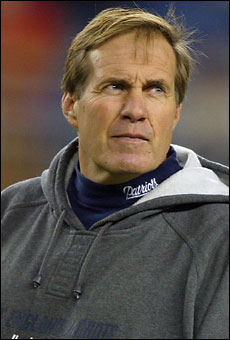
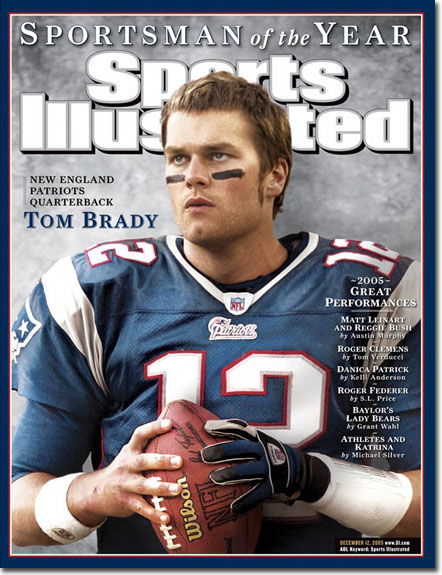
The New England Patriots are poised to win their fourth Super Bowl in seven years. Although it may be early to describe the team as a dynasty, they are clearly doing something right. Those of you who have read Fired Up or Burned Out or attended our E Pluribus Partners presentations or workshops know that great teams create Connection Cultures. The Patriots are no exception.
Our model for sustainable superior performance holds that it requires Task Excellence + Relationship Excellence that comes from a Connection Culture. Bill Belichick is a task excellence master through and through. He has probably devised more metrics dashboards than a hard core General Electric Six Sigma Black Belt. The guy’s passion for excellence is off the charts. When it comes to Relationship Excellence, however, I’m not so sure. He seems a bit curmudgeonish.
And that’s where Tom Brady comes in, he’s the Relationship Excellence guy and Task Excellence guy to boot. When Sports Illustrated named Brady “Sportsman of the Year” in 2005, it commented that “his greatest achievement grows out of a “generosity of spirit.” He’s always pumping his teammates up with encouragement, giving knuckle fives and head butts. Brady stunned the sports world in 2005 when he accepted a contract that was nearly $40 million below market so that his teammates could stay together. Who wouldn’t love a teammate like that? Peter King, the Sports Illustrated writer, wrote he had never seen anything like it in his 16 year career, and “if you think that plays well in the locker room, you’re right.” When Visa wanted Brady to do a television advertisement, he said he would pass unless it included his offensive line. You get the idea.
In summary, Task Excellence + Relationship Excellence = Sustainable Superior Performance or, if you’re a Patriots fan, you might say Belichick + Brady = Trouble for the Giants. (In the spirit of transparency, you should know that I’m a born and bred Chicago Bears fan.)
Post Note: As you know by now, the Giants defeated the Patriots in a nail biter Super Bowl. Post game analysis clearly shows that creating a more connected culture among the Giants helped. Take a look at this article entitled, “Tom Coughlin: Management style analysis,” and see if you can identify the Vision, Value and Voice elements of a Connection Culture.
Strengthening Human Value in the Workplace
 I discovered this face on the Pantheon Fountain in Rome. Look into its eyes. What emotion do you see? Fear? For much of history, the average man lived in fear. During Ancient Times, empires killed or enslaved humans. During the Middle Ages when feudalism prevailed most people were considered to be property and lived in fear of their owners. The Modern Age began around the time the Pantheon Fountain was designed by Jacopo della Porta in 1570. During the Modern Age, human rights expanded dramatically. Today, it’s unfathomable that four decades ago, African-Americans had to attend separate schools, sit in the back of public buses, drink from separate water fountains and were not allowed to dine at many restaurants.
As human value has increased, so too has economic prosperity. When people are treated with respect, have a sense of belonging to the society they live in, and have access to educational and occupational opportunities, they feel valued and are more likely to thrive.
What might tomorrow bring when it comes to human value?
There is reason to believe human value will increase in the workplace given the coming labor shortage and competitive pressures of globalization. Employers will need to increase human value to attract and retain the people they need to meet market opportunities. And what might the workplace look like if human value increases in the years and decades ahead? Perhaps more people will feel informed and that their ideas and opinions will be considered by decision-makers. Perhaps everyone will have a mentor to help them grow. As human value increases in the workplace, so too will employee engagement, productivity and innovation. Why not increase human value in your workplace today? If you’re a leader, how might you make the people you are responsible for leading feel valued? If you’re not in a leadership position, how might you help your colleagues feel valued?
Note: Leader to Leader published an article in its current edition that Jason Pankau and I wrote. The article is entitled, “Strengthening Human Value in Organizational Cultures.” This is an especially meaningful event for me because it is the first time my work has appeared in Leader to Leader, an award-winning leadership journal that has a connection to two of my heroes: Frances Hesselbein and the late Peter Drucker. Peter Drucker was the founder of Leader to Leader and Frances Hesselbein was a co-founder and has been its editor-in-chief. To find out more about Frances, pick of a copy of Fired Up or Burned Out where you will find a chapter on her miraculous turnaround of the Girl Scouts of the USA. To read the essay, “How Peter Drucker Changed My Life,” click on employee engagement.
“Intentional Connectors” boost employee engagment
Years ago when I was chief marketing officer for a business unit at Charles Schwab, I met David Bradley for lunch in New York City. David is an extremely successful entrepreneur. He founded the Corporate Executive Board and is the owner of The Atlantic magazine. David wanted to pick my brain about how to make his magazine more attractive to advertisers. To my surprise, early in our conversation David asked me to tell him about my personal story…where I was born and grew up, what events influenced my beliefs, who were the individuals I most admired, etc. As I began to recount my journey in life, David asked question after question and was genuinely interested in me.
After a long lunch conversation, I felt like David cared about me as a person and not just as a potential source of revenue. His example taught me a powerful lesson: intentionally connecting with people is wise. I believe being what we refer to as an “Intentional Connector” is one of the factors that has contributed to David’s success.
Many of our clients at E Pluribus Partners have committed to become Intentional Connectors in 2008. As our work shows, great leaders are Intentional Connectors. By their words and deeds, they create Connection Cultures that improve employee engagement, productivity and innovation. Why don’t you commit to becoming an Intentional Connector too? The personal benefits include improved physical and mental health and superior productivity and creativity.
Empathy and understanding provide the foundation to establish human connections. Would the people who work alongside you say that you think of them as human doings or human beings? Do you know their stories? We encourage you to devote some time early this year to getting to know the people around you. When you do you’ll find that, in addition to enriching your life at work, your colleagues will become more trusting and cooperative. One-on-one time during an occasional coffee break or lunch together is a great opportunity to get to know your colleagues. This simple step is common sense… yet in our day and age it is surprisingly uncommon in practice. Task excellence is a must to thrive in business but it is unsustainable if not accompanied by the relationship excellence that comes from a Connection Culture.