Family Spirit

GUEST: Michael Stallard

TOPIC: How important is having a family spirit in your business? Michael Stallard talks with Jim Blasingame about how a family spirit culture in your business improves employee engagement and becomes contagious with customers, too.

Brought to you by The Small Business Advocate®

Thriving Past Life’s Speed Bumps

I’ve lived long enough to know that everyone and every organization faces difficult periods over their lifetimes. Take a look at Bo Burlingham’s account of Reell Precision Manufacturing Corporation, entitled “Paradise Lost”, that appears in the February edition of Inc. Magazine. This is an excellent example of an organization that was on a roll until it hit the inevitable speed bump. Reell traditionally had a strong relationship with its employees then changes in the marketplace placed considerable strain on that relationship.

The employer-employee relationship is in some ways like a marriage. When the two parties invest in strengthening the relationship the bonds of shared identity, empathy and understanding through difficult times, it is more likely their relationship will endure. Relationships that survive challenging periods often emerge on the other side stronger and, in a profound way, even more satisfying.

Treat your employees like family and customers like friends

2005_0306italy20060019.JPG

As my wife and I set off for an anniversary trip to Italy, Jack Mitchell, author of Hug Your Customers, sent us a list of restaurant recommendations in Florence. L’osteria di Giovanni was one of the restaurants on Jack’s list. In addition to being an author, Jack is Chairman of Mitchells/Richards/Marshes, a very successful, upscale clothing store with locations in Connecticut and Long Island. Jack’s family’s philosophy is to “treat employees like family and customers like friends.” I knew Jack judged other businesses by that standard and his recommendations would reflect it.

Giovanni’s is just a few blocks from the Arno River and a short walk from the Ponte Vecchio. Dinner at Giovanni’s was an extraordinary experience. After we ordered appetizers, Giovanni stopped by to greet us, ask us where we were from and if we were enjoying our stay in town. He brought us more appetizers to try (on the house), including a new olive oil. In addition to the wine we ordered, Giovanni brought out another wine for us to try because “if you have new olive oil you must have new wine to go with it…it’s a tradition.”

Throughout the evening Giovanni circled back to talk with us. He told us about the Great Flood in Florence in 1966 and how Americans and other individuals from around the world came to help the local people save the town’s artistic treasures. Later he came back with a book about the flood and showed us some of its pictures. When I asked if I could make copies of a few of its pages, he offered to lend me the book. After we finished dessert, paid our bill and began preparing to return to our hotel, Giovanni introduced us to one of his daughters and another American couple seated near us. Before we knew it, we were engaged in conversation. Out came Giovanni with yet another wine to try and freshly prepared chestnuts. Perhaps a half hour later, we bid everyone farewell.

2005_0306italy200600231.JPG

To call that evening at Giovanni’s merely a dinner would seriously miss the mark. It was among the most memorable experiences during our stay in Italy.

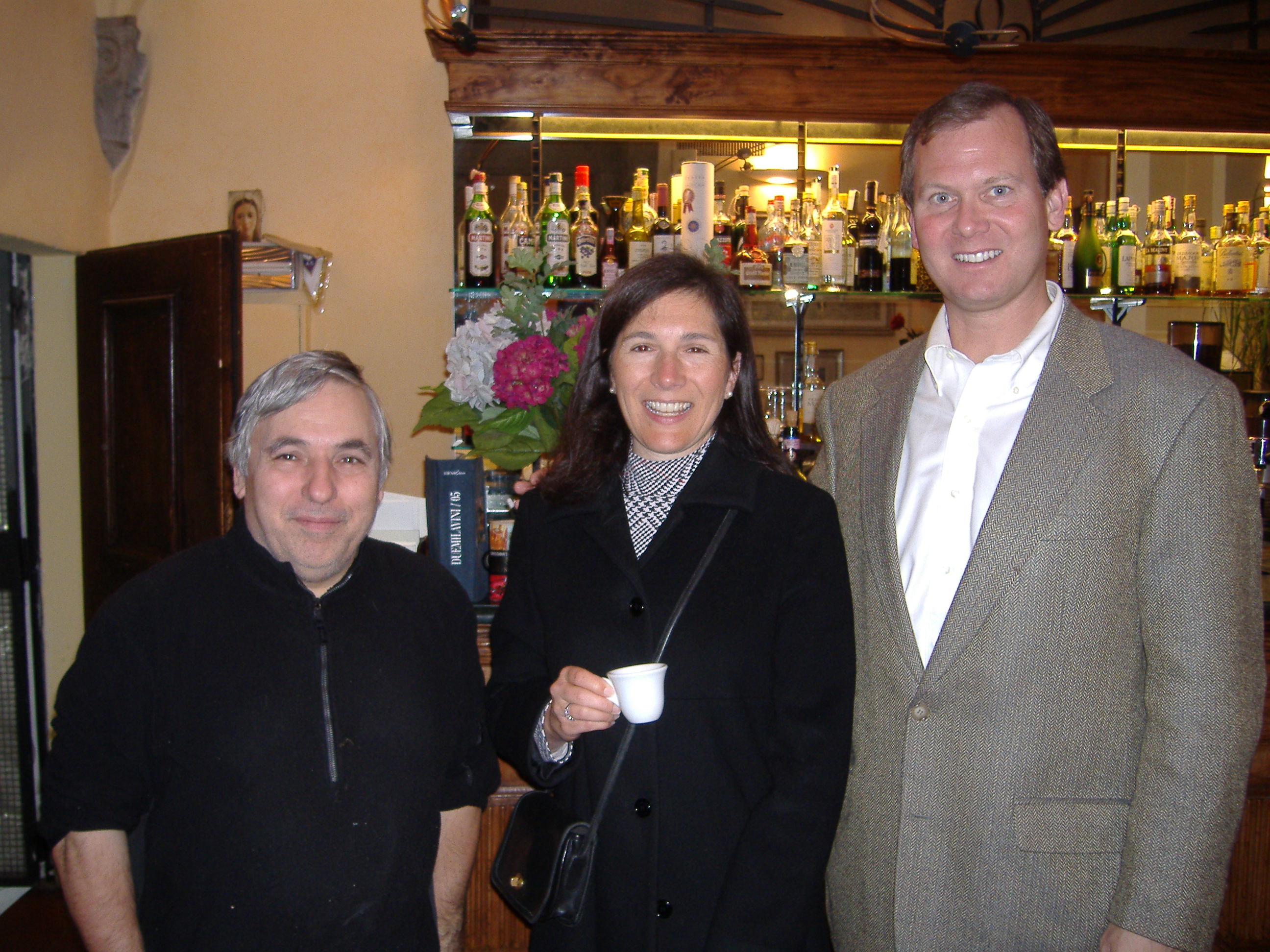
The next morning, we stopped by to return Giovanni’s book. Although the restaurant was not open for breakfast, he invited us in for espresso. We talked more and took a few pictures to remember our new friend and his gift of hospitality.

Six things you don’t know about me

About as close as I’ll get to surfing!

I just got tagged by Phil Gerbyshak, from Slacker Manager . It’s part of a game going around the blogging community where you are asked to share six things that people don’t know about you.

So, here you go:

1) My wife and kids call me “Mr. coffee hour” because I’m nearly always the last person to leave social gatherings.

2) I like any movie with helicopters in it.

3) My worst job was being a security guard at a grocery store on the South side of Rockford, Illinois on one Christmas break from college.

4) I was president of the largest party group on campus and loved it. The group was the American Marketing Association chapter at Illinois State University (we had six hundred members and were nationally recognized as one of the best college chapters in America).

5) I love to read and write even though I’m dyslexic (decoding skills)

6) Most of the time, I’m the only male in our home…my wife Katie and I have two teenage daughters and our family dog is a female (that’s beginning to change as teenage boys stop by more often these days : ).

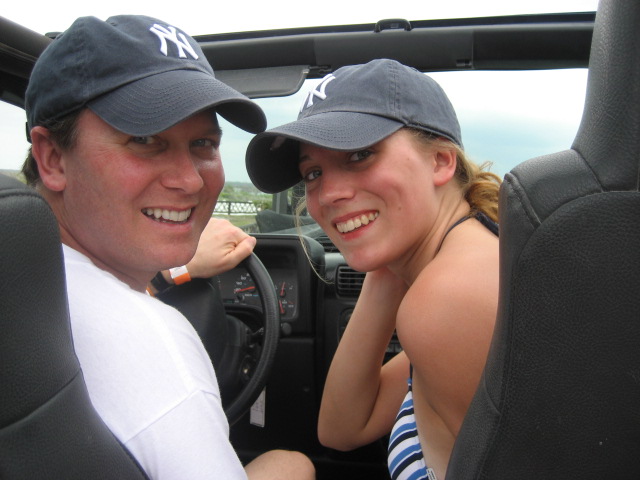
Here’s another: the picture above with my daughters is about as close as I’ll get to surfing. Our camera wasn’t fast enough to capture my nanosecond of verticality on the waves!

Now, as to the rules of this game: You must:

1. Link to the person who tagged you.
2. Post the rules on your blog.
3. Share six non-important things/habits/quirks about yourself.
4. Tag at least three people at the end of your post and link to their blogs.
5. Let each person know they have been tagged by leaving a comment on their blog.

So my next three are:

1. Seth Godin

2. Robbie de Villiers

3. Wes Roberts

The invisible bond of shared values

img_0009.JPGSeveral leaders who opposed America — Adolf Hitler, Nikita Khrushev and Osama Bin Laden, to name a few — thought that America’s diversity would pull the nation apart in the face of adversity. They seriously underestimated the power of shared values. Americans are rationally and emotionally committed to a set of values that include freedom of speech, religion and assembly, the right to vote and equality of opportunity. They’re like bees buzzing around with no apparent connection to one another, that is, until they are under siege…then just watch them come together to oppose their enemies. This advertising spot, entitled “I am an American” sponsored by the Ad Council and conceived by the GSD&M advertising agency following the September 11 terrorist attacks, makes the point in a profound and moving way.

Few leaders understand how powerful shared values can be to increase the trust, cooperation and performance of group members. Sometimes simple mantras unite people. Disney’s mantra “to make people happy” or Charles Schwab’s mantra to “make the most useful and ethical financial products in the world” move the hearts of true believers and motivate them to go the extra mile, individually and collectively.

Sometimes it’s difficult to identify a mantra that resonates. If you’re in the waste management business, your employees are not exactly drawn to disposing of trash. How you conduct your business, then, can be a way to unite them. One private company CEO I know in the waste management business clearly explains to employees what he and his colleagues believes in and how they expect everyone to live up to a set of aspirational values. This CEO treats his employees like family. He knows them. He’s there for them. He expects them to respect and help one another. He also has high performance expectations and he works harder than anyone else to meet them. These are universal values that everyone can rally around provided that the leadership’s “walk” is consistent with its “talk.” The result of the waste management CEO’s values-driven leadership has been low employee turnover, a reputation for reliability and integrity, and a highly profitable business.

If you’re a leader, what values do you believe in when it comes to the business you are responsible for leading? Taking time to identify your values, your personal experiences that formed those values and why employees should embrace them, could help take your business to the next level of performance.

Why “inclusiveness” is in at GE

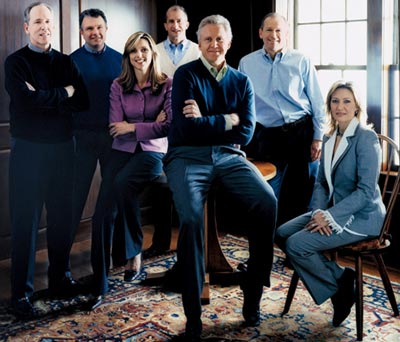
jeffrey_immelt1.jpgAs word has spread that General Electric is trying to increase “inclusiveness,” cynics might snicker and comment that Jack Welch was mistaken to hand over the CEO reigns to a teddy bear like Jeff Immelt. They would be wrong.

Implicit in any criticism is that GE is getting soft. That’s highly unlikely. A core value of GE’s culture is a passion for excellence..that’s not going away. The problem at GE, and in many other organizations, is that under employee performance ranking systems, employees who are not rated in very highest category can begin to feel like second class citizens, especially if the top ranked employees treat them as such. It may be that they’re not kept in the loop or given an opportunity to share their ideas and opinions anywhere near as much as the stars, so they may not feel like they are valued or have a voice.

To Immelt’s credit he knows that these are the core employees of GE. If GE thrives, it will be in part because the core employees are playing at the top of their game which means they need to know and feel like valued members of the team.

There’s no management problem that I can’t find a sports analogy for, including GE’s current situation. Consider Michael Jordon and the Chicago Bulls predicament before the Bulls dynasty run of six NBA Championships. When Phil Jackson became the Bulls’ coach, he helped Michael Jordan see that the Bulls would never be champions if the rest of the Bulls’ players didn’t feel like they were Michael’s teammates, which they didn’t because Michael hung around with his entourage all the time and hogged the ball, especially at critical moments. When Jordan became inclusive by hanging out with the other Bulls, coaching some of them, and trusting them enough at critical moments to pass the ball to them, well, that’s when the Bull’s dynasty was born.

At GE, the stars need to learn to be inclusive in dealing with core employees. They need to be inclusive socially (by getting to know them), economically (by paying them fairly), and politically (by keeping them informed and considering their opinions and ideas). Doing so will meet their human needs for respect, recognition and belonging. Failing to be inclusive will result in low employee engagement and potentially sabotage behavior.

Leading GE is one of the most challenging leadership assignments in the world today. GE’s “inclusiveness” agenda is yet another reason to believe Jack Welch knew what he was doing when he handed the baton to Jeff Immelt.

Weathering the downsizing storm

2005_0311cruise050023.JPGDownsizing, whether it’s from a business slow down, efficiency improvements or merger, is stressful on employees. Encouraging open conversation and human connection is critical to maintaining employee engagement and organizational health during such periods. Click here to read an article I wrote about it for Customerservicecrossing.com.

Alone No Longer

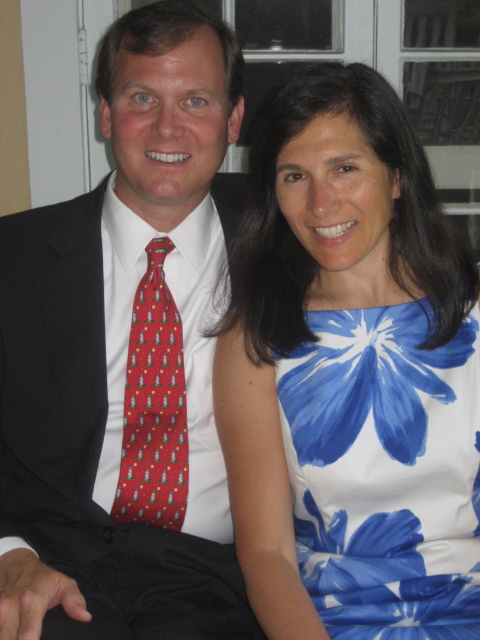
Michael and Katie StallardFour years ago this month, I learned that Katie my wife had advanced ovarian cancer. I set my work aside to focus on helping Katie and our daughters through a difficult season in life. During that period, I spent a lot of time with people. As a result, I learned that I am an “achievaholic” and because of it I had been missing the joy of developing relationships in life beyond my family and close circle of friends. Amazon.com recently published my essay entitled “Alone No Longer” about what I learned during the years Katie battled cancer. For a free download, click here.

Should we separate our personal and work lives?

More people today want to be genuine at work. They feel it is unhealthy to “put on an act” at work in order to fit in and be more promotable. Instead, they want to work at companies that celebrate individuality rather than at companies that force individuals to conform to a corporate stereotype. I once thought that I needed to maintain a certain distance from co-workers in order to be promoted. Experience has taught me otherwise. To read an article on this topic that I wrote for CustomerServiceCrossing.com, click here.