Will You Surf The Perfect Storm Ahead…or Be Drowned By It?

Following is a sneak peak of an article I wrote for the American Management Association’s Journal.  It’s about the necessity for organizations to increase employee engagement (including leadership development, team building and  talent management) as the forces of globalization and demographics collide. 

A perfect storm is brewing that will threaten many a firm’s survival in the decades ahead. Market forces, like storm fronts, are colliding to produce volatile conditions.  Companies that anticipate and prepare for these threats can convert them into major opportunities to leap ahead of their competitors.  There’s plenty of evidence that savvy companies are already moving to gain a competitive edge.   Rather than being crushed by the massive waves, these companies are effectively surfing them and will leave competitors in their wake.  
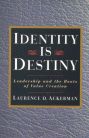
Book Review: Identity is Destiny

 identity-is-destiny-cover.jpg Laurence Ackerman wrote a brilliant book entitled Identity is Destiny.  The book is about the importance of identity to organizations.  I highly recommend that C suite leaders and those who aspire to be read this insightful book.

Identity is critical to employee engagement and the Connection Cultures my colleagues and I at
E Pluribus Partners write and speak about. It is the first element in a Connection Culture which we describe as “Inspiring Identity” (or “Vision” for short).

Identity reflects the things that make a person or organization unique.  As brand experts know, relevant differentiation determines brand effectiveness and value.  Being unique or differentiated in a way that’s relevant to employees and customers is essential to an organization’s long term success.  I know of no other book that describes this force of identity as well as Ackerman’s.  Every organization should answer the questions Ackerman poses:

Who are we?

What do we stand for?

How are we different?

Where do I fit in?

In Ackerman’s book you will learn about his experiences as an identity consultant at Siegel & Gale, one of the world’s leading corporate identity consultants, where Ackerman helped organizations such as Korn Ferry, Fidelity and Alcoa discover their identities. Today, Ackerman is an independent consultant at
The Identity Circle.   He is also the author of a book about personal identity entitled The Identity Code.  I’ll have more to say about The Identity Code in future writings.

Upcoming Webcasts on Employee Engagement and Social Media

Tomorrow at 11 AM Eastern I will be presenting a 30 minute webcast on Connection Cultures and how they increase employee engagement.  This is just one in a series of webcasts I’m hosting at the Leadership and Employee Engagement channel of BrightTALK.  In the coming weeks a number of great guests will be sharing their insights about employee engagement including Kristina Patrick, Senior Project Manager for Outreach & Business Development at H&R Block,  Larry Ackerman, CEO of The Identity Circle and one of the leading experts today on corporate and individual identity, Marc Effron ,  VP of Talent Management at Avon and head of The New Talent Management Network, and Paul Spiegalman, CEO of Beryl Companies and author of Why Is Everyone Smiling?. Although some of the webcasts are not yet scheduled, you can sign up for my webcast on Connection Cultures and the webcast with Kristina Patrick of H&R Block by clicking employee engagement

Buzz: Marshall Goldsmith Endorsement, Second Printing, Now in Vietnamese, Speaking Engagements

Fired Up or Burned Out continues selling well even though we don’t have a radio, tv or periodical “platform,” as publishing industry people call it. The book has spread mostly by word of mouth. Good things keep happening.  Here are a few.  Next week the second English language printing arrives.  The book was just published in Vietnamese.   Best-selling author and executive coach Marshall Goldsmith recently wrote an endorsement of it.  

I’m also receiving a growing number of invitations to speak, write and do interviews. In the coming months I will speak at several companies as well as at the
American Management Association, the Wharton Alumni Club, the University of Pennsylvania Club,  the Marketing Executives Networking Group, the Advanced Learning Institute,  AthenaOnline and the Society for Human Resource Management.  Articles I authored or about our work were recently published in Chief Learning Officer magazine, The Economic Times, Moving Ahead, and Live Mint.  Upcoming articles about our work will be published in M World: The Journal of the American Management Association and Rotman.

What does it all mean?  In addition to the growing word of mouth buzz about Fired Up or Burned Out, the interest in employee engagement is rapidly increasing as companies find it difficult to recruit and retain people in certain areas such as technology, healthcare, retail and oil and gas.  Companies have also told me they find it difficult to recruit and retain Generation Y workers. Interest in increasing employee engagement is just beginning. Increasing labor shortages and the competitive effects of globalization make this inevitable.   

Strip Joints, Salesmen and Employee Engagement

John (not his real name) read Fired Up or Burned Out and contacted me about a dilemma he faced.  John is a salesperson.  One evening following dinner with a customer, John’s boss said he was taking the customer and John to a strip joint.  John’s boss does this regularly and views it as a legitimate best practice among salespeople.  John’s wife learned about it and expressed her disappointment.  She also warned that if it happened again, she would leave him.  John understood her disgust.  He felt disappointed too.  John told me that frequenting strip clubs was against his values.  He also disclosed that he had little financial resources as well as a wife and several children to support, some of them in college.  He asked me for advice. What would you advise John to do?

Amazing Things Are Happening Here!

ny-presbyterian-logo.gif Last year Leader to Leader published a article Jason Pankau and I wrote entitled “Strengthening Human Value in Organizational Cultures.”  Previously, the article was only available to Leader to Leader’s subscribers or those who paid for a download from the internet.  Leader to Leader has given us permission to post the paper on our blog so here it is.  The article begins with a remarkable story about New York-Presbyterian Hospital System and its CEO Dr. Herbert Pardes.  New York-Presbyterian presently uses the tag line “amazing things are happening here” in its advertising and other written communications.  Read the article and I think you’ll agree.  

The Incredibles: Everyone has a “Voice” at Pixar

incredibles.jpgConnection Cultures have three elements: Vision, Value and Voice.  When people feel connected to the organization’s identity, to their colleagues and to their day-to-day tasks, they thrive (and so does their organization). Here’s a link to an article in Harvard Business Review by Pixar CEO Ed Catmull about how Pixar fosters creativity. It should come as no surprise that Voice is an integral part of Pixar’s culture.  With a string of hits that are the envy of the entertainment industry, I think it’s fair to say Pixar is thriving.  You might even conclude, they’re “Incredible!”

To learn more about Connection Cultures and how they increase employee engagement, productivity and innovation, download “
The Connection Culture Manifesto“at changethis.com. 

Increasing Employee Engagement at Lockheed Martin

Recently I presented to a group of 60 leaders at Lockheed Martin, the world’s largest defense company. The leaders I met were part of the aerospace group. It was an inspiration for me to hear their stories including one about a dramatic savings of time and money when a front line worker’s idea led to a software breakthrough. I was pleased to see some business units were using the Start-Stop-Continue exercise. Both of these reflect the Connection Culture element of Voice. I was also inspired hearing how one leader felt extremely proud of his company and its important work when his young son saw up close the remarkable military aircraft his dad worked on (which reflects the element of Vision).  I get goosebumps just thinking about these stories and how the bright, dedicated and motivated employees at Lockheed Martin are creating a Connection Culture!  

The Brain, Change and Connection Cultures

Consultant and blogger Michael DeWitt just posted an insightful video on his Spooky Action blog about how the human brain works and its implications for organizational change efforts.  He concludes that leaders should create Connection Cultures to help members of organizations accept and implement change.  Check out DeWitt’s blog.  It’s one of the blogs I frequently read for its wisdom on topics such as leadership, organizations and employee engagement.