

 Changethis.com has posted my new downloadable, free EBook entitled The Connection Culture: A New Source of Competitive Advantage. For all of those individuals you know who don’t have time to read Fired Up or Burned Out or who want to investigate further before purchasing a copy, this is a perfect introduction to the ideas of E Pluribus Partners including why we need to create Connection Cultures. Help us spread the word by forwarding a copy to everyone you know who needs to read it.
CausePlanet.org features Fired Up or Burned Out in March
 CausePlanet.org selected Fired Up or Burned Out as its featured book summary for March. CausePlanet.org is an organization that provides nonprofit executives and their board members from the business sector a one-stop source for news, articles, and recommended published works. The book summary includes nonprofit applications and interpretations. Nonprofit executives will get fast information about how the book is applicable to the nonprofit world and why they should buy it, as well as an author interview. After readers have screened the summary for its relevance in their respective professional stations, they can click on a link to purchase it.
Connector in Chief
Recently I read comments in The Economist about presidential candidates John McCain and Barack Obama that caught my eye. The British magazine wrote about Obama that he had the ability to deliver the “dose of unity” that America needs. Regarding McCain the same article pointed out that he had a long record of “reaching out to his political opponents.”
What I hear in these statements is that The Economist is recognizing that McCain and Obama are connectors. They build relational bridges to their political opponents rather than burn the bridges across the table.
Given the nasty partisan atmosphere in Washington these days and America’s declining reputation in the world, it may be that voters yearn for a president who reaches out and connects with others, both at home and abroad. Our research at E Pluribus Partners clearly establishes that great leaders have the ability to connect with people and increase connection among a group of people. In fact, a high degree of connection (or social capital as it is also referred to) is necessary for nations to thrive. The ability to bring people together is an essential skill to possess in order to be an effective president.
What do you think about McCain and Obama as connectors? Are you aware of any examples that would help us judge how these two candidates stack up when it comes to their history of increasing connection, community and unity among the people they were responsible for leading.
Book Review: Happy Hour Is 9 to 5, by Alexander Kjerulf, the Chief Happiness Officer
 Did you know the Danish language has a specific word for “happiness at work?” The word is “arbejdsglaede.” Don’t ask me to pronounce it.
Thanks to Alexander Kjerulf, a Dane who is also known as the Chief Happiness Officer, I now know of this wonderful yet difficult to pronounce word. And thanks to Alex’s book, entitled Happy Hour is 9 to 5: Learn How to Love Your Job, Create a Great Business and Kick Butt at Work, I’ve learned even more about happiness at work.
Alex’s writing has a fun, conversational style, just like you would expect from the Chief Happiness Officer. Don’t mistake this for fluff, however. He covers a lot interesting material in a thoughtful, smart way. I especially liked the research he presented on the effect of starting meetings out on a positive note, his thoughts on the cult of overwork, how to tell a bad boss to improve and his frank advice in a section entitled “should I stay or should I go?” There is a very good chapter about what managers can do to help make people happy at work. This is a pragmatic book filled with ideas and suggestions.
You can purchase Alex’s book, purchase and download it in a pdf format, or read it for free. All three options are available at his Chief Happiness Officer blog (www.positivesharing.com). In addition to Alex’s book, his blog has a lot of interesting material too. Be sure to check it out. You’ll be happy you did.
The Uncommon Unity of U2

The band U2 has had a phenomenal run since they came together in 1976. Critics rave over their music and fans can’t seem to get enough of their songs and concert appearances. All the signs indicate that U2 is at the top of its game and will be going strong for the foreseeable future.
Why has this particular band been together for more than 30 years when most other bands that experience success for a period of time eventually fall apart?
Book Review: Big Ideas to Big Results by Michael Kanazawa and Robert H. Miles
 Leaders of organizations would be wise to follow the advice of Michael Kanazawa and Robert H. Miles in their excellent new book entitled Big Ideas to Big Results. The book lays out their ACT process for organizations that want to implement three to four major initiatives each year.
The authors developed the process to combat corporate ADD and employee disengagement when it comes to executing organizational initiatives. Based on my more than 25 years experience in business as well as my expertise in employee engagement, I completely agree that these are major problems in organizations today and the solution the authors propose will go a long way toward solving them. The ACT process is also entirely consistent with the employee engagement research we have conducted at E Pluribus Partners. The process helps meet universal human needs for respect, recognition, belonging, autonomy, personal growth and meaning. When these needs are met, people thrive, individually and collectively.
Strong leaders will recognize many of the best practice steps that are a part of ACT. What makes this book valuable is the way the authors integrate the best practices into a step-by-step process and add ideas of their own. I especially liked their descriptions of annual high employee engagement cascades with tablework and quarterly mini-cascades. It’s worth buying the book just to learn more about these practices alone.
Big Ideas to Big Results will be popular with corporate leaders. It’s a quick and easy read with a process that is practical to implement and will help move organizations from identifying big ideas to producing big results. Congratulations to Kanazawa and Miles for developing an important new contribution to process innovation and describing it in an accessible way.
Employee Clubs
Employee clubs are a wonderful way to increase employee engagement, human connection and social capital in the workplace. Take a look at Kristina Shevory’s article in today’s New York Times entitled, “The Workplace as Clubhouse.”
Why is everyone smiling?

My daughter, Sarah, recently rushed to the aid of a fellow cheerleader on her high school squad who had been injured. Sarah does this regularly. When Sarah was injured in the fall her teammates came over to see her, bringing flowers or candy. One day while driving together, I asked Sarah why she and others rushed to help every teammate in need. She turned to me and said, “Dad, we’re a family.”
I smiled and felt a sense of pride.
Over the last three years I’ve observed Sarah, her teammates, her coach and the women who I affectionately refer to as the “cheer ladies,” i.e. the moms (and a few dads) of the girls who do so much to support the team. A family spirit is alive and well among the members of this group. They encourage each other and come to each other’s aid when one of their members is in need. Their coach holds the girls to high standards when it comes to performing their tasks as cheerleaders. They were the state champion cheerleading squad last year. She also expects them to be a family. These two factors, what my colleagues and I at E Pluribus Partners describe as “Task Excellence” and “Relationship Excellence,” give the girls the necessary skills and confidence to fly high in the air and know with certainty that their teammates will catch them and protect them from harm. You see, cheerleading is a dangerous sport these days, as most emergency room physicians can attest. Failed stunts often end in injury. In the last year alone, Sarah has broken both hands. Other girls on the team have had concussions, broken bones, dislocated shoulders, and more. It takes a lot of trust in their teammates to do what these girls do. And to watch them care for and count on each other is to observe something beautiful…and increasingly rare.
Most companies could learn a lot from these teenage girls. We all long to belong and yet so few workplaces these days have a family spirit. It seems that in the worst cultures people view you as a competitor or they are indifferent to your well-being so they don’t want to help you or bother to ask. This is tragic.
Recently, I wrote on this blog a post entitled “Why Inclusiveness Is in at GE.” It describes why Jeff Immelt is wise to make all GE employees feel included as a part of the GE team, which is exactly what he is doing. Other leaders would be wise to take note and make the employees they are responsible for leading feel included too, “like a family” as Sarah said.
In a workplace where people feel included you will hear a lot of conversation and see people reach out to help their colleagues. You will hear a lot of questions too. How are you? How’s your family? What can I do to help you? How are you feeling about your career? Are you learning and growing? Where do you want to be in the next few years in your career? What types of training and mentoring will help you? What can we do better as a company? What do you think about this idea, problem or opportunity? How often do you hear these questions at work today?
People feel the most included and connected with the group when the bonds of shared identity, empathy and understanding are strong. It produces a family spirit and that, in turn, increases trust and cooperation so that individuals feel safer taking risks because they know that their colleagues “have their backs,” so to speak.
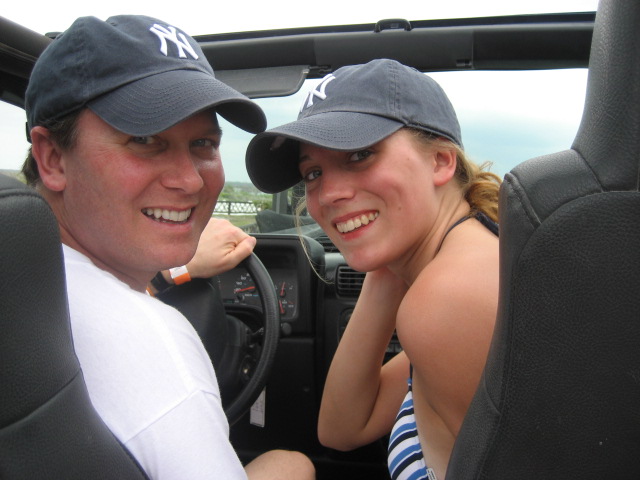 I hope more leaders begin to create a family spirit among the people they lead. If they make a serious effort to do this and sustain it over time, morale and employee engagement will soar.
In our book entitled Fired Up or Burned Out, we describe how to create a Connection Culture that makes people feel like they are part of the family. The development of a family spirit in a company is also described in Paul Spiegelman’s wonderful new book entitled Why is Everyone Smiling? Paul is the CEO of the Beryl Companies based in Bedford, Texas. This is a book every leader should read and the family spirit Paul describes in it is what I hope every worker will one day experience.
Family Spirit

GUEST: Michael Stallard
TOPIC: How important is having a family spirit in your business? Michael Stallard talks with Jim Blasingame about how a family spirit culture in your business improves employee engagement and becomes contagious with customers, too.
Brought to you by The Small Business Advocate®
Thriving Past Life’s Speed Bumps
I’ve lived long enough to know that everyone and every organization faces difficult periods over their lifetimes. Take a look at Bo Burlingham’s account of Reell Precision Manufacturing Corporation, entitled “Paradise Lost”, that appears in the February edition of Inc. Magazine. This is an excellent example of an organization that was on a roll until it hit the inevitable speed bump. Reell traditionally had a strong relationship with its employees then changes in the marketplace placed considerable strain on that relationship.
The employer-employee relationship is in some ways like a marriage. When the two parties invest in strengthening the relationship the bonds of shared identity, empathy and understanding through difficult times, it is more likely their relationship will endure. Relationships that survive challenging periods often emerge on the other side stronger and, in a profound way, even more satisfying.