

 I recently recorded an interview with Wayne Turmel, host of the “Cranky Middle Manager Show” on The Podcast Network. Wayne is an interviewer extraordinaire. His valuable insights and sense of humor always enliven and enlighten listeners (and guests) alike. Wayne and I had a great chat about Connection Cultures and how they increase employee engagement. To listen to the interview, click here. Also, be sure to check out the other 139 interviews Wayne has recorded since the Cranky Middle Manager show’s inception.
Category Archives: Human Value
The Mitchells’ Mission: Conquer the World One Hug at a Time
The year was 1958. Ed Mitchell, a 54-year old marketing and advertising executive, got off the commuter train from New York City and announced he was leaving the awful work culture he had put up with for years. Ed realized that being nice to people and caring about them were in his DNA and the work environments on Madison Avenue that he had experienced were indifferent to those values or viewed them as a weakness. Those toxic environments were literally giving him ulcers.
Ed decided to open a men’s clothing store in his hometown of Westport, Connecticut. This way he could create the environment that he wanted to work in. Ed began by selling a selection of three suits all hung on a pipe left over from the previous tenant, a plumber. Norma, his wife, made coffee for customers. The Mitchells’ friends showed up to support them. Ed loved being around people and getting to know them. He loved helping community organizations too. And the Mitchells’ store grew and grew.
Ed and Norma’s sons, Bill and Jack, eventually joined the business, as have members of the next generation of Mitchells. Eventually, they acquired two other stores that shared their philosophy: Richards in Greenwich, Connecticut and Marshs in Long Island. Mitchells/Richards/Marshs has been wildly successful. In 2002, they were named Menswear Retailer of the Year. Celebrities and corporate chiefs flock to their stores. The three stores are likely pulling in around $100 million a year in revenue.
What are the keys to their success? When you observe their business, a few things stand out. They value excellence in the products they sell and the services they provide. A business that attracts and retains the kind of demanding customers that Mitchells/Richards/Marshs has doesn’t succeed unless it meets its customers’ high expectations. What really differentiates Mitchells/Richards/Marshs is hugs. The “hug” is a metaphor for connecting with clients and associates and showing them you care. A hug is everything from knowing a customer’s pet’s name to going the extra mile to get a customer’s suit delivered on time for a special event. In service businesses, hugs are a source of competitive advantage. The Mitchells community (family, associates, customers and suppliers) hug each other a lot. Imagine a culture that lives by the Golden Rule and you’ll get a sense for what it feels like to be a part of this hugging community.
Now the hugging philosophy has gone global. And why not? It’s inspiring. It’s simple. It works. Jack Mitchell, chairman and CEO of Mitchells/Richards/Marshs, has written Hug Your Customers (available in several languages) and Hug Your People. I highly recommend both books. They will give you an up-close look at a thriving example of the Connection Culture I’ve written about that increases employee and customer engagement.
Ed and Norma Mitchell are no longer alive but their dream lives on and so does their example of how to treat employees like family and customers like friends. They started something great. You can find the inspiring story of how it all began on Jack Mitchell’s website under videos (it’s entitled “The Ed Mitchell Story”). To the casual observer, it may look like these unassuming merchants are mere purveyors of exceptional clothing and jewelry. In reality, it’s so much more. They’re philosophers in Armani and Zegna, spreading their beliefs one hug at a time.
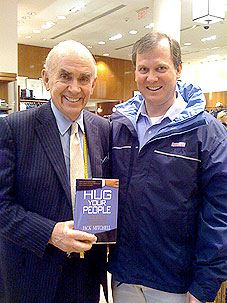
Picture: Jack Mitchell (on the left) with me at his book signing held at the Richards’ store in my hometown of Greenwich, Connecticut.
David Zinger: Connecting for the Cause
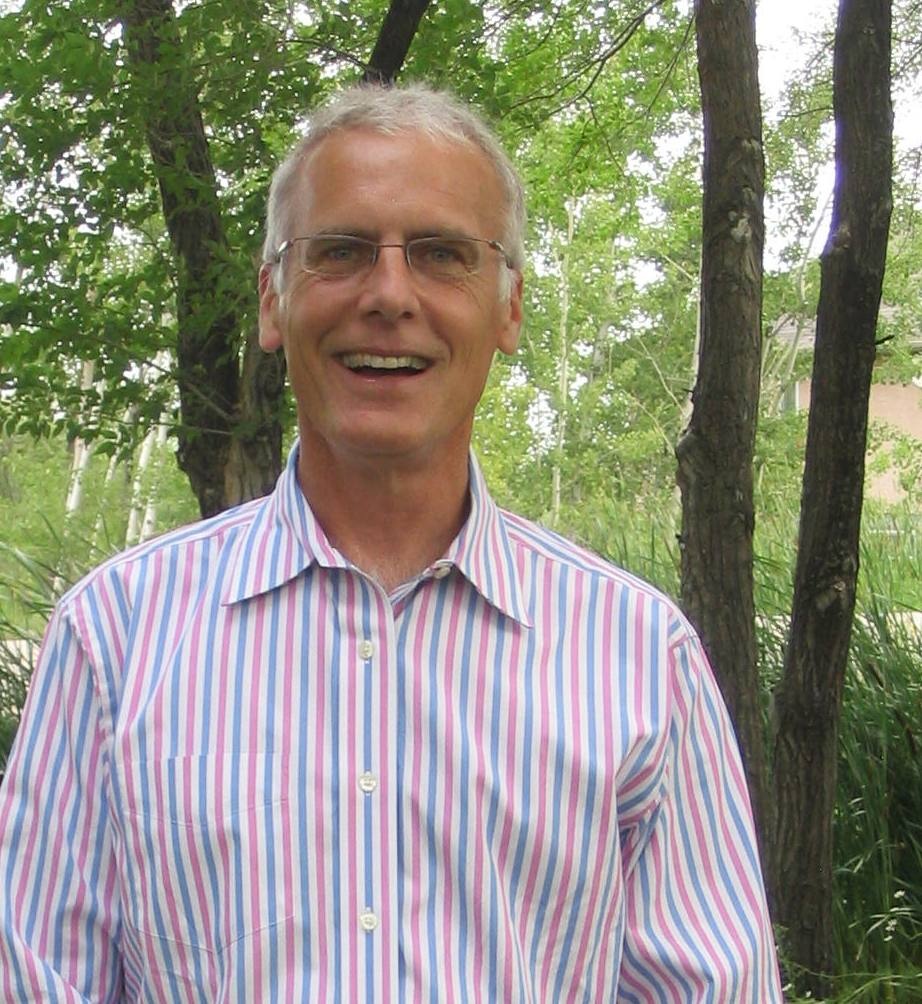 Periodically, I have the good fortune to meet someone whose selfless acts of goodness inspire me to write about him. David Zinger is one such person. He is the visionary who started the Employee Engagement Network that has become the online marketplace of ideas about employee engagement. David also maintains his own site entitled: Employee Engagement: Results That Matter. He is a tireless writer about all things regarding employee engagement. A few months back David reviewed my book. He liked it and decided to help raise awareness of my work. Some writers would view me as a competitor. Not David. Where others see a competitor, David sees a colleague who shares his passion to improve the lives of people in the workplace. He sent me and my co-authors pieces of rope as a symbol of the “Brotherhood of the Rope” that he has written about. His example inspired me and made me curious to know more about him and why he is so passionate about employee engagement. David was kind enough to oblige my request for an interview. Following is the result.
Share your thoughts with journalist William J. Holstein on his BNet Blog
William J. Holstein, the well-respected business journalist who writes for The New York Times, The Wall Street Journal, Business Week and other publications, described my new ebook on connection this way: “For those of us who write about business, every once in a while, a book or an article comes along that seems so simple on some levels yet communicates great wisdom. “The Connection Culture: A New Source of Competitive Advantage” is one such work.”
On his blog, Holstein invites readers of The Connection Culture to share their thoughts. Would you consider sharing your reaction by posting a comment on Holstein’s BNet blog entitled “The Corner Office?”
Make every employee a part of your team

GUEST: Michael Stallard
TOPIC: What are you doing to make sure your employees are engaged? Michael Stallard joins Jim to talk about how to make our team members feel that they actually have an important stake in the direction of the business.
Brought to you by The Small Business Advocate®
The Uncommon Unity of U2

The band U2 has had a phenomenal run since they came together in 1976. Critics rave over their music and fans can’t seem to get enough of their songs and concert appearances. All the signs indicate that U2 is at the top of its game and will be going strong for the foreseeable future.
Why has this particular band been together for more than 30 years when most other bands that experience success for a period of time eventually fall apart?
Why is everyone smiling?

My daughter, Sarah, recently rushed to the aid of a fellow cheerleader on her high school squad who had been injured. Sarah does this regularly. When Sarah was injured in the fall her teammates came over to see her, bringing flowers or candy. One day while driving together, I asked Sarah why she and others rushed to help every teammate in need. She turned to me and said, “Dad, we’re a family.”
I smiled and felt a sense of pride.
Over the last three years I’ve observed Sarah, her teammates, her coach and the women who I affectionately refer to as the “cheer ladies,” i.e. the moms (and a few dads) of the girls who do so much to support the team. A family spirit is alive and well among the members of this group. They encourage each other and come to each other’s aid when one of their members is in need. Their coach holds the girls to high standards when it comes to performing their tasks as cheerleaders. They were the state champion cheerleading squad last year. She also expects them to be a family. These two factors, what my colleagues and I at E Pluribus Partners describe as “Task Excellence” and “Relationship Excellence,” give the girls the necessary skills and confidence to fly high in the air and know with certainty that their teammates will catch them and protect them from harm. You see, cheerleading is a dangerous sport these days, as most emergency room physicians can attest. Failed stunts often end in injury. In the last year alone, Sarah has broken both hands. Other girls on the team have had concussions, broken bones, dislocated shoulders, and more. It takes a lot of trust in their teammates to do what these girls do. And to watch them care for and count on each other is to observe something beautiful…and increasingly rare.
Most companies could learn a lot from these teenage girls. We all long to belong and yet so few workplaces these days have a family spirit. It seems that in the worst cultures people view you as a competitor or they are indifferent to your well-being so they don’t want to help you or bother to ask. This is tragic.
Recently, I wrote on this blog a post entitled “Why Inclusiveness Is in at GE.” It describes why Jeff Immelt is wise to make all GE employees feel included as a part of the GE team, which is exactly what he is doing. Other leaders would be wise to take note and make the employees they are responsible for leading feel included too, “like a family” as Sarah said.
In a workplace where people feel included you will hear a lot of conversation and see people reach out to help their colleagues. You will hear a lot of questions too. How are you? How’s your family? What can I do to help you? How are you feeling about your career? Are you learning and growing? Where do you want to be in the next few years in your career? What types of training and mentoring will help you? What can we do better as a company? What do you think about this idea, problem or opportunity? How often do you hear these questions at work today?
People feel the most included and connected with the group when the bonds of shared identity, empathy and understanding are strong. It produces a family spirit and that, in turn, increases trust and cooperation so that individuals feel safer taking risks because they know that their colleagues “have their backs,” so to speak.
 I hope more leaders begin to create a family spirit among the people they lead. If they make a serious effort to do this and sustain it over time, morale and employee engagement will soar.
In our book entitled Fired Up or Burned Out, we describe how to create a Connection Culture that makes people feel like they are part of the family. The development of a family spirit in a company is also described in Paul Spiegelman’s wonderful new book entitled Why is Everyone Smiling? Paul is the CEO of the Beryl Companies based in Bedford, Texas. This is a book every leader should read and the family spirit Paul describes in it is what I hope every worker will one day experience.
Family Spirit
GUEST: Michael Stallard
TOPIC: How important is having a family spirit in your business? Michael Stallard talks with Jim Blasingame about how a family spirit culture in your business improves employee engagement and becomes contagious with customers, too.
Brought to you by The Small Business Advocate®
Treat your employees like family and customers like friends

As my wife and I set off for an anniversary trip to Italy, Jack Mitchell, author of Hug Your Customers, sent us a list of restaurant recommendations in Florence. L’osteria di Giovanni was one of the restaurants on Jack’s list. In addition to being an author, Jack is Chairman of Mitchells/Richards/Marshes, a very successful, upscale clothing store with locations in Connecticut and Long Island. Jack’s family’s philosophy is to “treat employees like family and customers like friends.” I knew Jack judged other businesses by that standard and his recommendations would reflect it.
Giovanni’s is just a few blocks from the Arno River and a short walk from the Ponte Vecchio. Dinner at Giovanni’s was an extraordinary experience. After we ordered appetizers, Giovanni stopped by to greet us, ask us where we were from and if we were enjoying our stay in town. He brought us more appetizers to try (on the house), including a new olive oil. In addition to the wine we ordered, Giovanni brought out another wine for us to try because “if you have new olive oil you must have new wine to go with it…it’s a tradition.”
Throughout the evening Giovanni circled back to talk with us. He told us about the Great Flood in Florence in 1966 and how Americans and other individuals from around the world came to help the local people save the town’s artistic treasures. Later he came back with a book about the flood and showed us some of its pictures. When I asked if I could make copies of a few of its pages, he offered to lend me the book. After we finished dessert, paid our bill and began preparing to return to our hotel, Giovanni introduced us to one of his daughters and another American couple seated near us. Before we knew it, we were engaged in conversation. Out came Giovanni with yet another wine to try and freshly prepared chestnuts. Perhaps a half hour later, we bid everyone farewell.
To call that evening at Giovanni’s merely a dinner would seriously miss the mark. It was among the most memorable experiences during our stay in Italy.
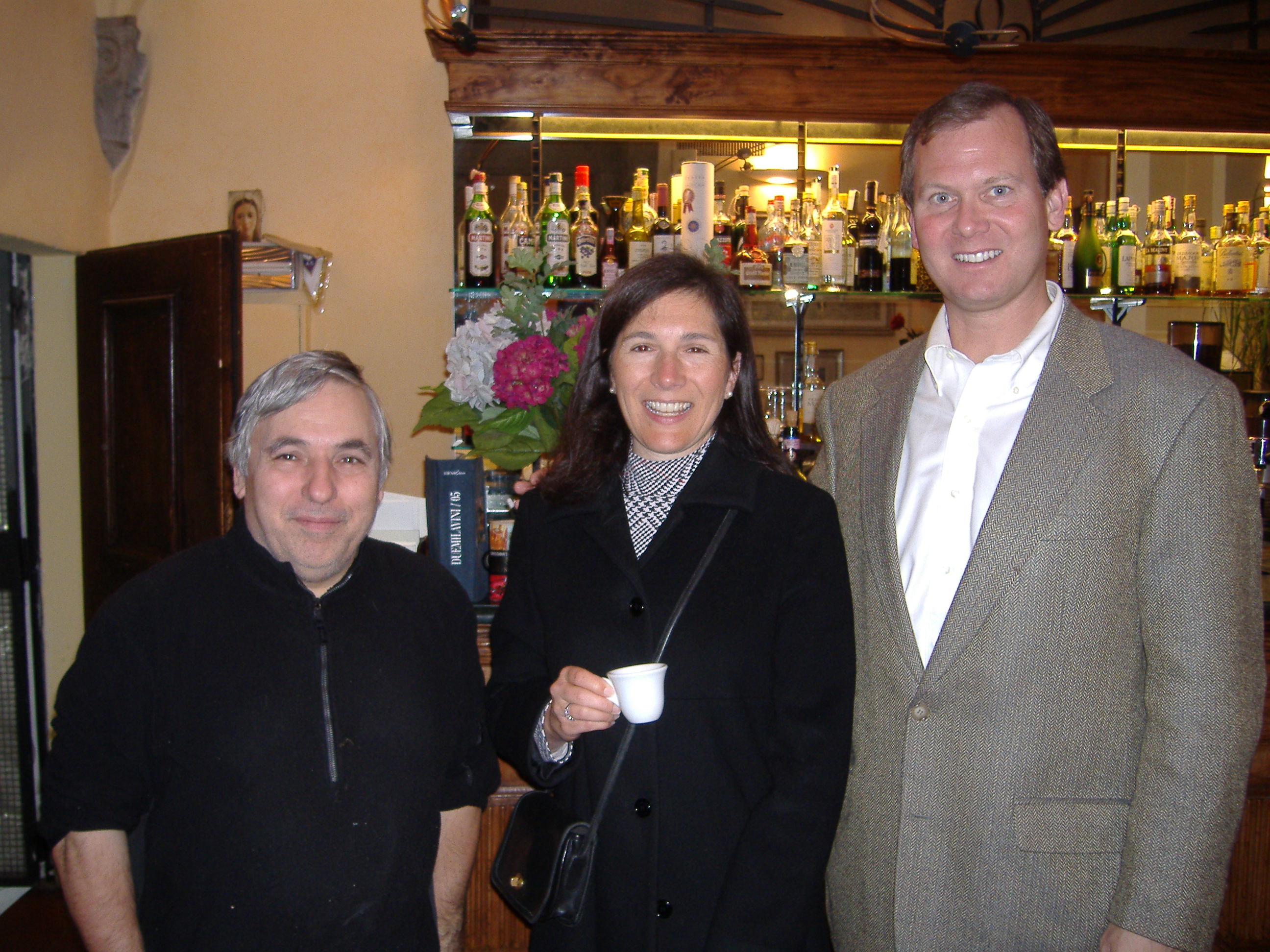
The next morning, we stopped by to return Giovanni’s book. Although the restaurant was not open for breakfast, he invited us in for espresso. We talked more and took a few pictures to remember our new friend and his gift of hospitality.
Six things you don’t know about me

I just got tagged by Phil Gerbyshak, from Slacker Manager . It’s part of a game going around the blogging community where you are asked to share six things that people don’t know about you.
So, here you go:
1) My wife and kids call me “Mr. coffee hour” because I’m nearly always the last person to leave social gatherings.
2) I like any movie with helicopters in it.
3) My worst job was being a security guard at a grocery store on the South side of Rockford, Illinois on one Christmas break from college.
4) I was president of the largest party group on campus and loved it. The group was the American Marketing Association chapter at Illinois State University (we had six hundred members and were nationally recognized as one of the best college chapters in America).
5) I love to read and write even though I’m dyslexic (decoding skills)
6) Most of the time, I’m the only male in our home…my wife Katie and I have two teenage daughters and our family dog is a female (that’s beginning to change as teenage boys stop by more often these days : ).
Here’s another: the picture above with my daughters is about as close as I’ll get to surfing. Our camera wasn’t fast enough to capture my nanosecond of verticality on the waves!
Now, as to the rules of this game: You must:
1. Link to the person who tagged you.
2. Post the rules on your blog.
3. Share six non-important things/habits/quirks about yourself.
4. Tag at least three people at the end of your post and link to their blogs.
5. Let each person know they have been tagged by leaving a comment on their blog.
So my next three are:
1. Seth Godin
3. Wes Roberts