Will You Surf The Perfect Storm Ahead…or Be Drowned By It?

Following is a sneak peak of an article I wrote for the American Management Association’s Journal.  It’s about the necessity for organizations to increase employee engagement (including leadership development, team building and  talent management) as the forces of globalization and demographics collide. 

A perfect storm is brewing that will threaten many a firm’s survival in the decades ahead. Market forces, like storm fronts, are colliding to produce volatile conditions.  Companies that anticipate and prepare for these threats can convert them into major opportunities to leap ahead of their competitors.  There’s plenty of evidence that savvy companies are already moving to gain a competitive edge.   Rather than being crushed by the massive waves, these companies are effectively surfing them and will leave competitors in their wake.  
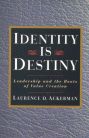
Book Review: Identity is Destiny

 identity-is-destiny-cover.jpg Laurence Ackerman wrote a brilliant book entitled Identity is Destiny.  The book is about the importance of identity to organizations.  I highly recommend that C suite leaders and those who aspire to be read this insightful book.

Identity is critical to employee engagement and the Connection Cultures my colleagues and I at
E Pluribus Partners write and speak about. It is the first element in a Connection Culture which we describe as “Inspiring Identity” (or “Vision” for short).

Identity reflects the things that make a person or organization unique.  As brand experts know, relevant differentiation determines brand effectiveness and value.  Being unique or differentiated in a way that’s relevant to employees and customers is essential to an organization’s long term success.  I know of no other book that describes this force of identity as well as Ackerman’s.  Every organization should answer the questions Ackerman poses:

Who are we?

What do we stand for?

How are we different?

Where do I fit in?

In Ackerman’s book you will learn about his experiences as an identity consultant at Siegel & Gale, one of the world’s leading corporate identity consultants, where Ackerman helped organizations such as Korn Ferry, Fidelity and Alcoa discover their identities. Today, Ackerman is an independent consultant at
The Identity Circle.   He is also the author of a book about personal identity entitled The Identity Code.  I’ll have more to say about The Identity Code in future writings.

Losing the Level 5 Leader: Why Companies Fall From Great to Good or Worse.

When you look at the companies that Jim Collins has identified as being great, few could be described in those terms today.  Why?  The short answer is that companies change.  Or more specifically, the people leading them change.  Collins identified so-called “Level 5 Leaders” as one of the attributes of great companies.   These leaders combine a determination to build a great organization with personal humility.  No factor is more important to an organization’s success that having Level 5 Leaders because they have a positive effect on employee engagement. They infuse the organization with values such as excellence,  work ethic, open-mindedness, humility, and courage to speak truth.  These are values that help create a Connection Culture, primarily by increasing the elements of Vision (Inspiring Identity) and Voice(Knowledge Flow) in the organization’s culture.  

When a Level 5 Leader hands over the organization to a leader who isn’t a Level 5, the new leader may fail in several ways.  He may not be openminded causing people to fear telling him the truth.  Lacking sufficient knowledge to make optimal decisions, he makes suboptimal decisions and the organization’s performance declines.  Lacking humility, he may fail to be participative by not informing or seeking the opinions and ideas of others. When this value cascades throughout the organization, 75-80 percent of employees will become disengaged so that they stop putting their best efforts in their work and they stop communicating.  The failure of communication, once again, leads to suboptimal decision-making and performance decline.  The point here is that developing and selecting leaders is critical to sustain superior performance.  An organization may be great for a season with a Level 5 Leader on top but if it fails to develop a pipeline of Level 5 Leaders, however, you can be sure it won’t remain there.

Who is responsible for talent management in your organization?  Does she have the CEO’s ear?  Does he have the resources required to get the job done?  Your organization’s future depends on it.

Marc Effron, VP of Talent management at Avon and head of the New Talent Management Network, is a thought and practice leader in talent management. He will be my guest in a webcast on the October 30 at 11AM Eastern.  Marc will talk about how he and his team have transformed talent management at Avon with the “One Page Talent Management” approach they developed. You can sign up to hear this webcast live by clicking on
employee engagement.     

A Lively Time with Wharton Alumni in the Big Apple

wharton_logo2.jpgLast evening I had the privilege of speaking to the Wharton Alumni Club in New York City.  Wharton is recognized as among the very top tier business schools in the world and it is especially known for its strength in finance.  Given this reputation, you might expect a rather staid group of Wall Street types, right?  This group was anything but!  They were extremely interested in employee engagement and connection cultures.  They shared stories. They asked great questions.  It was a very stimulating evening!   Thank you to those Wharton alums who made time in their busy schedules to learn about the importance of connection.

U2’s Unity Featured in the American Management Association’s “Moving Ahead” Publication

u2-black-and-white.jpgAn article I wrote on the band U2 was just published by the American Management Association as the lead article in its popular Moving Ahead: Management Insights for Business Success publication. The article is entitled “Great Teams: The Extraordinary Unity of U2.” Thanks goes to Shari Lifland, the editor of Moving Ahead, who made some very clever changes from the original article that was published last month in The Economic Times in India.