

Tune in on Monday September, 29 at 11:00 AM Eastern to hear my guest Paul Spiegelman, CEO of Beryl Companies, talk about the remarkable corporate culture at Beryl and how it has resulted in high levels of employee engagement and retention. This organization is one of the best examples of a Connection Culture that I am aware of and Paul is an extraordinary leader and author of Why is Everyone Smiling?
For more about the webcast click on employee engagement.
Tag Archives: Employee Engagement
Webcast Tomorrow: H&R Block Connects to Improve Employee Engagement
Tomorrow morning at 11:00 AM EST I will host a webcast with my guest Kristina Patrick, Senior Project Manager for Outreach and Business Development at H&R Block. When H&R Block’s new leaders wanted to engage employees by involving them in a conversation about the firm’s activities, they turned to Kristina. With a meager budget Kristina and her colleagues produced a remarkable internal news and social media platform that had H&R Blockers buzzing. Tune into this webcast to hear how you and your company can increase employee engagement and get the biggest bang out of your internal communications and social media budgets. You can sign up to attend by clicking on employee engagement.
Do you thrive at work? Connection is key to employee engagement.
In this presentation to executives at Lockheed Martin, Michael Lee Stallard explains why organizations and individuals need Connection Cultures to thrive.
Michael Stallard on Connection Cultures from Michael Stallard on Vimeo.
Great News Today From Katie’s Oncologist
 Forgive me for this self indulgent post but I feel like shouting to the world what my wife Katie’s oncologist just told us today: Katie is not likely to have a recurrence of ovarian cancer after being in remission for nearly five years now. We celebrated the good news with Dr. Hensley, our oncologist, and Nick the doorman (and now receptionist) at Memorial Sloan Kettering Cancer Center who I’ve written about.
In honor of the occasion, I’m posting an essay I wrote about our experience, how our family members and friends helped us through a difficult season, and how the experience changed my life. Feeling that people really cared for Katie and our family helped me see how important relationships are in life and to employee engagement in the workplace. Here’s the essay:
Many inspiring articles have been written about cancer survivors and how the experience of facing cancer and overcoming it changed their lives. Fewer are the stories of those who walk beside them. Just as a stone tossed into still waters sends ripples to every shore, the impact of a cancer diagnosis stirs up the lives of more than just the patient. This is my story of walking beside my wife Katie during her battle against first one cancer and then a second a year later, a journey that has changed my life in expected and unexpected ways.
Will You Surf The Perfect Storm Ahead…or Be Drowned By It?
Following is a sneak peak of an article I wrote for the American Management Association’s Journal. It’s about the necessity for organizations to increase employee engagement (including leadership development, team building and talent management) as the forces of globalization and demographics collide.
A perfect storm is brewing that will threaten many a firm’s survival in the decades ahead. Market forces, like storm fronts, are colliding to produce volatile conditions. Companies that anticipate and prepare for these threats can convert them into major opportunities to leap ahead of their competitors. There’s plenty of evidence that savvy companies are already moving to gain a competitive edge. Rather than being crushed by the massive waves, these companies are effectively surfing them and will leave competitors in their wake.
Book Review: Identity is Destiny
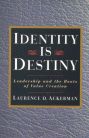 Laurence Ackerman wrote a brilliant book entitled Identity is Destiny. The book is about the importance of identity to organizations. I highly recommend that C suite leaders and those who aspire to be read this insightful book.
Identity is critical to employee engagement and the Connection Cultures my colleagues and I at E Pluribus Partners write and speak about. It is the first element in a Connection Culture which we describe as “Inspiring Identity” (or “Vision” for short).
Identity reflects the things that make a person or organization unique. As brand experts know, relevant differentiation determines brand effectiveness and value. Being unique or differentiated in a way that’s relevant to employees and customers is essential to an organization’s long term success. I know of no other book that describes this force of identity as well as Ackerman’s. Every organization should answer the questions Ackerman poses:
Who are we?
What do we stand for?
How are we different?
Where do I fit in?
In Ackerman’s book you will learn about his experiences as an identity consultant at Siegel & Gale, one of the world’s leading corporate identity consultants, where Ackerman helped organizations such as Korn Ferry, Fidelity and Alcoa discover their identities. Today, Ackerman is an independent consultant at The Identity Circle. He is also the author of a book about personal identity entitled The Identity Code. I’ll have more to say about The Identity Code in future writings.
Losing the Level 5 Leader: Why Companies Fall From Great to Good or Worse.
When you look at the companies that Jim Collins has identified as being great, few could be described in those terms today. Why? The short answer is that companies change. Or more specifically, the people leading them change. Collins identified so-called “Level 5 Leaders” as one of the attributes of great companies. These leaders combine a determination to build a great organization with personal humility. No factor is more important to an organization’s success that having Level 5 Leaders because they have a positive effect on employee engagement. They infuse the organization with values such as excellence, work ethic, open-mindedness, humility, and courage to speak truth. These are values that help create a Connection Culture, primarily by increasing the elements of Vision (Inspiring Identity) and Voice(Knowledge Flow) in the organization’s culture.
When a Level 5 Leader hands over the organization to a leader who isn’t a Level 5, the new leader may fail in several ways. He may not be openminded causing people to fear telling him the truth. Lacking sufficient knowledge to make optimal decisions, he makes suboptimal decisions and the organization’s performance declines. Lacking humility, he may fail to be participative by not informing or seeking the opinions and ideas of others. When this value cascades throughout the organization, 75-80 percent of employees will become disengaged so that they stop putting their best efforts in their work and they stop communicating. The failure of communication, once again, leads to suboptimal decision-making and performance decline. The point here is that developing and selecting leaders is critical to sustain superior performance. An organization may be great for a season with a Level 5 Leader on top but if it fails to develop a pipeline of Level 5 Leaders, however, you can be sure it won’t remain there.
Who is responsible for talent management in your organization? Does she have the CEO’s ear? Does he have the resources required to get the job done? Your organization’s future depends on it.
Marc Effron, VP of Talent management at Avon and head of the New Talent Management Network, is a thought and practice leader in talent management. He will be my guest in a webcast on the October 30 at 11AM Eastern. Marc will talk about how he and his team have transformed talent management at Avon with the “One Page Talent Management” approach they developed. You can sign up to hear this webcast live by clicking on employee engagement.
A Lively Time with Wharton Alumni in the Big Apple
 Last evening I had the privilege of speaking to the Wharton Alumni Club in New York City. Wharton is recognized as among the very top tier business schools in the world and it is especially known for its strength in finance. Given this reputation, you might expect a rather staid group of Wall Street types, right? This group was anything but! They were extremely interested in employee engagement and connection cultures. They shared stories. They asked great questions. It was a very stimulating evening! Thank you to those Wharton alums who made time in their busy schedules to learn about the importance of connection.
Upcoming Webcasts on Employee Engagement and Social Media
Tomorrow at 11 AM Eastern I will be presenting a 30 minute webcast on Connection Cultures and how they increase employee engagement. This is just one in a series of webcasts I’m hosting at the Leadership and Employee Engagement channel of BrightTALK. In the coming weeks a number of great guests will be sharing their insights about employee engagement including Kristina Patrick, Senior Project Manager for Outreach & Business Development at H&R Block, Larry Ackerman, CEO of The Identity Circle and one of the leading experts today on corporate and individual identity, Marc Effron , VP of Talent Management at Avon and head of The New Talent Management Network, and Paul Spiegalman, CEO of Beryl Companies and author of Why Is Everyone Smiling?. Although some of the webcasts are not yet scheduled, you can sign up for my webcast on Connection Cultures and the webcast with Kristina Patrick of H&R Block by clicking employee engagement.
Buzz: Marshall Goldsmith Endorsement, Second Printing, Now in Vietnamese, Speaking Engagements
Fired Up or Burned Out continues selling well even though we don’t have a radio, tv or periodical “platform,” as publishing industry people call it. The book has spread mostly by word of mouth. Good things keep happening. Here are a few. Next week the second English language printing arrives. The book was just published in Vietnamese. Best-selling author and executive coach Marshall Goldsmith recently wrote an endorsement of it.
I’m also receiving a growing number of invitations to speak, write and do interviews. In the coming months I will speak at several companies as well as at the American Management Association, the Wharton Alumni Club, the University of Pennsylvania Club, the Marketing Executives Networking Group, the Advanced Learning Institute, AthenaOnline and the Society for Human Resource Management. Articles I authored or about our work were recently published in Chief Learning Officer magazine, The Economic Times, Moving Ahead, and Live Mint. Upcoming articles about our work will be published in M World: The Journal of the American Management Association and Rotman.
What does it all mean? In addition to the growing word of mouth buzz about Fired Up or Burned Out, the interest in employee engagement is rapidly increasing as companies find it difficult to recruit and retain people in certain areas such as technology, healthcare, retail and oil and gas. Companies have also told me they find it difficult to recruit and retain Generation Y workers. Interest in increasing employee engagement is just beginning. Increasing labor shortages and the competitive effects of globalization make this inevitable.