Make every employee a part of your team


GUEST: Michael Stallard

TOPIC: What are you doing to make sure your employees are engaged? Michael Stallard joins Jim to talk about how to make our team members feel that they actually have an important stake in the direction of the business.

Brought to you by The Small Business Advocate®

Spitzer’s Self-Sabotage…Why?

When I first heard about New York Governor Eliot Spitzer’s alleged involvement with prostitutes, I wasn’t surprised. I’m not condoning Spitzer’s behavior but there is more to the story that you’ll rarely see in the press. Let me explain why certain leaders resort to this brand of reckless and self-defeating behavior.

Free EBook at Changethis.com

4406connectionculture_cover.jpgChangethis.com has posted my new downloadable, free EBook entitled The Connection Culture: A New Source of Competitive Advantage.  For all of those individuals you know who don’t have time to read Fired Up or Burned Out or who want to investigate further before purchasing a copy, this is a perfect introduction to the ideas of E Pluribus Partners including why we need to create Connection Cultures. Help us spread the word by forwarding a copy to everyone you know who needs to read it.

The Uncommon Unity of U2

u2_super_bowl.jpg
The band U2 has had a phenomenal run since they came together in 1976. Critics rave over their music and fans can’t seem to get enough of their songs and concert appearances. All the signs indicate that U2 is at the top of its game and will be going strong for the foreseeable future.

Why has this particular band been together for more than 30 years when most other bands that experience success for a period of time eventually fall apart?

Why is everyone smiling?

img_4627.JPG

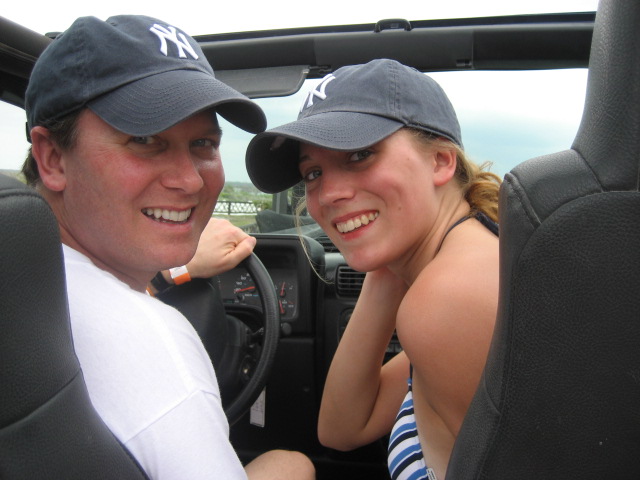
My daughter, Sarah, recently rushed to the aid of a fellow cheerleader on her high school squad who had been injured. Sarah does this regularly. When Sarah was injured in the fall her teammates came over to see her, bringing flowers or candy. One day while driving together, I asked Sarah why she and others rushed to help every teammate in need. She turned to me and said, “Dad, we’re a family.”

I smiled and felt a sense of pride.

Over the last three years I’ve observed Sarah, her teammates, her coach and the women who I affectionately refer to as the “cheer ladies,” i.e. the moms (and a few dads) of the girls who do so much to support the team. A family spirit is alive and well among the members of this group. They encourage each other and come to each other’s aid when one of their members is in need. Their coach holds the girls to high standards when it comes to performing their tasks as cheerleaders. They were the state champion cheerleading squad last year.  She also expects them to be a family. These two factors, what my colleagues and I at E Pluribus Partners describe as “Task Excellence” and “Relationship Excellence,” give the girls the necessary skills and confidence to fly high in the air and know with certainty that their teammates will catch them and protect them from harm. You see, cheerleading is a dangerous sport these days, as most emergency room physicians can attest. Failed stunts often end in injury. In the last year alone, Sarah has broken both hands. Other girls on the team have had concussions, broken bones, dislocated shoulders, and more. It takes a lot of trust in their teammates to do what these girls do. And to watch them care for and count on each other is to observe something beautiful…and increasingly rare.

Most companies could learn a lot from these teenage girls. We all long to belong and yet so few workplaces these days have a family spirit. It seems that in the worst cultures people view you as a competitor or they are indifferent to your well-being so they don’t want to help you or bother to ask. This is tragic.

Recently, I wrote on this blog a post entitled “Why Inclusiveness Is in at GE.” It describes why Jeff Immelt is wise to make all GE employees feel included as a part of the GE team, which is exactly what he is doing. Other leaders would be wise to take note and make the employees they are responsible for leading feel included too, “like a family” as Sarah said.

In a workplace where people feel included you will hear a lot of conversation and see people reach out to help their colleagues. You will hear a lot of questions too. How are you? How’s your family? What can I do to help you? How are you feeling about your career? Are you learning and growing? Where do you want to be in the next few years in your career? What types of training and mentoring will help you? What can we do better as a company? What do you think about this idea, problem or opportunity? How often do you hear these questions at work today?

People feel the most included and connected with the group when the bonds of shared identity, empathy and understanding are strong. It produces a family spirit and that, in turn, increases trust and cooperation so that individuals feel safer taking risks because they know that their colleagues “have their backs,” so to speak.
img_2515.JPGI hope more leaders begin to create a family spirit among the people they lead. If they make a serious effort to do this and sustain it over time, morale and employee engagement will soar.

In our book entitled Fired Up or Burned Out, we describe how to create a Connection Culture that makes people feel like they are part of the family. The development of a family spirit in a company is also described in Paul Spiegelman’s wonderful new book entitled Why is Everyone Smiling? Paul is the CEO of the Beryl Companies based in Bedford, Texas. This is a book every leader should read and the family spirit Paul describes in it is what I hope every worker will one day experience.

Family Spirit

GUEST: Michael Stallard

TOPIC: How important is having a family spirit in your business? Michael Stallard talks with Jim Blasingame about how a family spirit culture in your business improves employee engagement and becomes contagious with customers, too.

Brought to you by The Small Business Advocate®

Thriving Past Life’s Speed Bumps

I’ve lived long enough to know that everyone and every organization faces difficult periods over their lifetimes. Take a look at Bo Burlingham’s account of Reell Precision Manufacturing Corporation, entitled “Paradise Lost”, that appears in the February edition of Inc. Magazine. This is an excellent example of an organization that was on a roll until it hit the inevitable speed bump. Reell traditionally had a strong relationship with its employees then changes in the marketplace placed considerable strain on that relationship.

The employer-employee relationship is in some ways like a marriage. When the two parties invest in strengthening the relationship the bonds of shared identity, empathy and understanding through difficult times, it is more likely their relationship will endure. Relationships that survive challenging periods often emerge on the other side stronger and, in a profound way, even more satisfying.

Treat your employees like family and customers like friends

2005_0306italy20060019.JPG

As my wife and I set off for an anniversary trip to Italy, Jack Mitchell, author of Hug Your Customers, sent us a list of restaurant recommendations in Florence. L’osteria di Giovanni was one of the restaurants on Jack’s list. In addition to being an author, Jack is Chairman of Mitchells/Richards/Marshes, a very successful, upscale clothing store with locations in Connecticut and Long Island. Jack’s family’s philosophy is to “treat employees like family and customers like friends.” I knew Jack judged other businesses by that standard and his recommendations would reflect it.

Giovanni’s is just a few blocks from the Arno River and a short walk from the Ponte Vecchio. Dinner at Giovanni’s was an extraordinary experience. After we ordered appetizers, Giovanni stopped by to greet us, ask us where we were from and if we were enjoying our stay in town. He brought us more appetizers to try (on the house), including a new olive oil. In addition to the wine we ordered, Giovanni brought out another wine for us to try because “if you have new olive oil you must have new wine to go with it…it’s a tradition.”

Throughout the evening Giovanni circled back to talk with us. He told us about the Great Flood in Florence in 1966 and how Americans and other individuals from around the world came to help the local people save the town’s artistic treasures. Later he came back with a book about the flood and showed us some of its pictures. When I asked if I could make copies of a few of its pages, he offered to lend me the book. After we finished dessert, paid our bill and began preparing to return to our hotel, Giovanni introduced us to one of his daughters and another American couple seated near us. Before we knew it, we were engaged in conversation. Out came Giovanni with yet another wine to try and freshly prepared chestnuts. Perhaps a half hour later, we bid everyone farewell.

2005_0306italy200600231.JPG

To call that evening at Giovanni’s merely a dinner would seriously miss the mark. It was among the most memorable experiences during our stay in Italy.

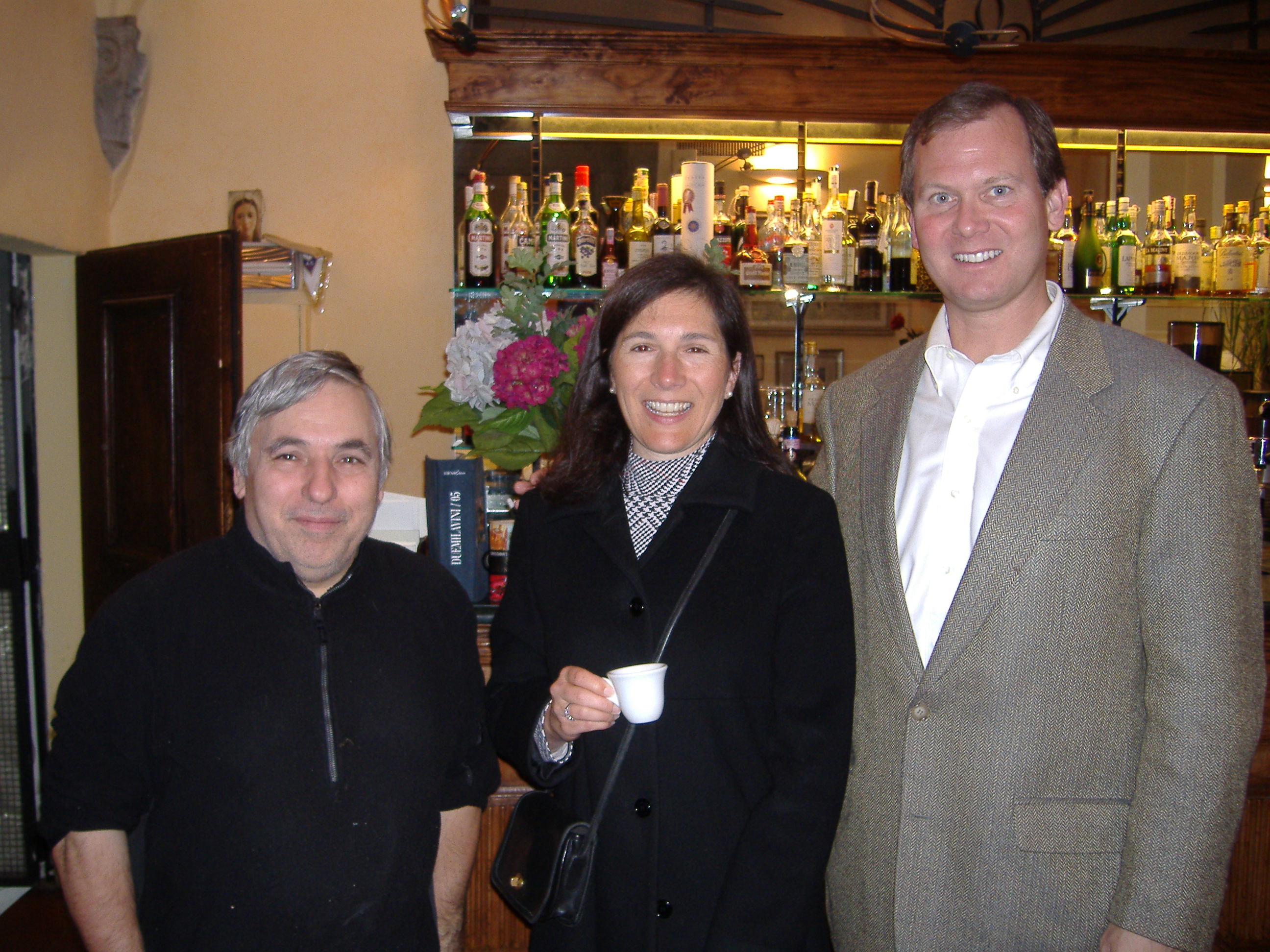
The next morning, we stopped by to return Giovanni’s book. Although the restaurant was not open for breakfast, he invited us in for espresso. We talked more and took a few pictures to remember our new friend and his gift of hospitality.

The invisible bond of shared values

img_0009.JPGSeveral leaders who opposed America — Adolf Hitler, Nikita Khrushev and Osama Bin Laden, to name a few — thought that America’s diversity would pull the nation apart in the face of adversity. They seriously underestimated the power of shared values. Americans are rationally and emotionally committed to a set of values that include freedom of speech, religion and assembly, the right to vote and equality of opportunity. They’re like bees buzzing around with no apparent connection to one another, that is, until they are under siege…then just watch them come together to oppose their enemies. This advertising spot, entitled “I am an American” sponsored by the Ad Council and conceived by the GSD&M advertising agency following the September 11 terrorist attacks, makes the point in a profound and moving way.

Few leaders understand how powerful shared values can be to increase the trust, cooperation and performance of group members. Sometimes simple mantras unite people. Disney’s mantra “to make people happy” or Charles Schwab’s mantra to “make the most useful and ethical financial products in the world” move the hearts of true believers and motivate them to go the extra mile, individually and collectively.

Sometimes it’s difficult to identify a mantra that resonates. If you’re in the waste management business, your employees are not exactly drawn to disposing of trash. How you conduct your business, then, can be a way to unite them. One private company CEO I know in the waste management business clearly explains to employees what he and his colleagues believes in and how they expect everyone to live up to a set of aspirational values. This CEO treats his employees like family. He knows them. He’s there for them. He expects them to respect and help one another. He also has high performance expectations and he works harder than anyone else to meet them. These are universal values that everyone can rally around provided that the leadership’s “walk” is consistent with its “talk.” The result of the waste management CEO’s values-driven leadership has been low employee turnover, a reputation for reliability and integrity, and a highly profitable business.

If you’re a leader, what values do you believe in when it comes to the business you are responsible for leading? Taking time to identify your values, your personal experiences that formed those values and why employees should embrace them, could help take your business to the next level of performance.