Connect by Negotiating With the Right Mindset

Disengaged employees explaining employee engagement to their boss

#30 Negotiate With a Mindset to Solve Problems Rather Than to Win

You can build connections with people during negotiations if you adopt and maintain the right mindset. Thinking of the people you are negotiating with as competitors leads to disconnection and distrust. Instead, think of them as holding knowledge that you need to unearth in order to identify an optimal solution that is a win-win for everyone involved. This requires probing, patience and perseverance to understand other people’s objectives, perceptions and sensitivities.

This is the thirtieth post in our series entitled “100 Ways to Connect.” The series highlights language, attitudes and behaviors that help you connect with others. Although the language, attitudes and behaviors focus on application in the workplace, you will see that they also apply to your relationships at home and in the community.


Be a Connection Catalyst

Happy Business People Giving High Fives

#29 Be a Connection Catalyst – Research by Rob Cross, Barbara Frederickson and Lynn Anderson has shown that the emotions of a group can spiral up or down.  Take the initiative to be optimistic, positive and upbeat.  Intentionally make positive connections with others to be a catalyst to get the positive spiral in your group going.

This is the twenty-ninth post in our series entitled “100 Ways to Connect.” The series highlights language, attitudes and behaviors that help you connect with others. Although the language, attitudes and behaviors focus on application in the workplace, you will see that they also apply to your relationships at home and in the community.

Connect at Work By Saying “Hello”

Two Businessmen Greeting Each Other#28 Greet People First Thing in the Morning

When you first arrive at work, take the time to say hello to the people with whom you come in contact.

One friend of ours said that as a young retail store manager, his district manager told him that some of the store employees complained about not receiving a personal greeting in the morning. The young manager didn’t intend to be rude; he was simply focused on the day’s tasks as soon as he walked in the door. But to his employees, it was important that he take the time to show that he valued them through greetings each morning. He began intentionally greeting each employee every morning, and his employees’ perception of him improved.

This is the twenty-eighth post in our series entitled “100 Ways to Connect.” The series highlights language, attitudes and behaviors that help you connect with others. Although the language, attitudes and behaviors focus on application in the workplace, you will see that they also apply to your relationships at home and in the community.

Connect by Saying “Thank You”

Delivering a Letter#27 Say “Thank You” and Write Thank You Notes

When someone does something for you, be sure to say “thank you.” This seems obvious but you would be surprised how many people don’t do this.

If the person did something for you that required considerable effort on his/her part, send a handwritten thank you note. Several outstanding leaders we know send handwritten thank you notes on a regular basis. They know that a handwritten note stands out in this age of electronic communications and communicates that they value the recipient.

This is the twenty-seventh post in our series entitled “100 Ways to Connect.” The series highlights language, attitudes and behaviors that help you connect with others. Although the language, attitudes and behaviors focus on application in the workplace, you will see that they also apply to your relationships at home and in the community.

Tell Me Stories

Two Young Women in Front of Computer Talking#26 “Tell Me Stories”

Have you ever asked someone how his/her day went only to hear a standard reply of “fine?”

If you really want to connect, try “I really would like to know how your day went, so tell me stories.” This practice works well with children, spouses and friends, too.

This is the twenty-sixth post in our series entitled “100 Ways to Connect.” The series highlights language, attitudes and behaviors that help you connect with others. Although the language, attitudes and behaviors focus on application in the workplace, you will see that they also apply to your relationships at home and in the community.

Connect, Encourage and Coach for Superior Performance

Supervisor Coaching Employee

#25 Connect, Encourage and Coach

Organizations with supervisors who connect with, encourage and coach the people they lead often perform better that those who don’t.  Southwest Airlines discovered that when they reduced the front line supervisor to front line employee ratio so the supervisors could connect, encourage and coach these employees, front line employees performed better. As a result, Southwest Airlines maintains a front line employee to front line supervisor ratio of 10:1 whereas some airlines maintain a ratio of 40:1.

This is the twenty-fifth post in our series entitled “100 Ways to Connect.” The series highlights language, attitudes and behaviors that help you connect with others. Although the language, attitudes and behaviors focus on application in the workplace, you will see that they also apply to your relationships at home and in the community.

Consider the Effect of Physical Space on Connection

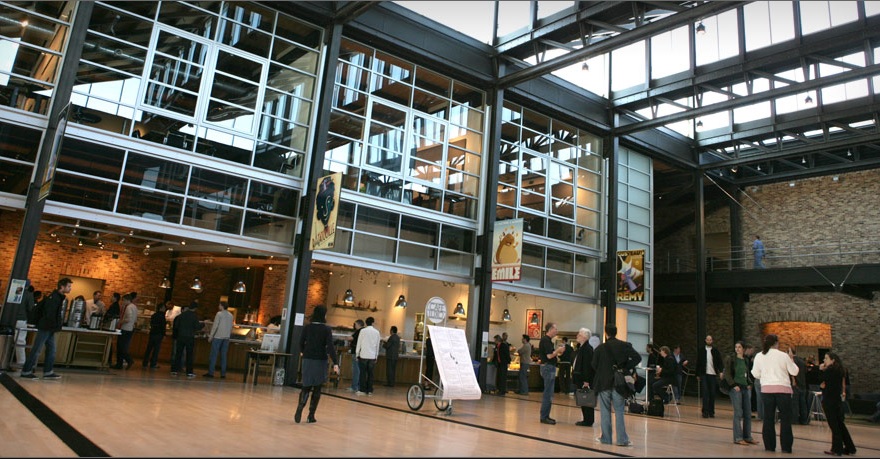
Pixar Headquarters

Pixar Headquarters, Photo Credit Pixar Animation Studios

#24 Consider the Effect of Physical Space on Connection

When Ed Catmull, CEO of Pixar Animation, and Steve Jobs, Pixar’s primary owner at the time, designed Pixar’s new headquarters, they created a large centralized space that included the company’s entrance and visitor reception area, meeting rooms, company cafeteria, employee mail slots and restrooms.  Their rationale was that a centralized space would facilitate connection.

Research supports that physical location and office space design does affect connection.  In general, people who work in physical space near one another feel more connected and physical spaces that are more open encourage connection. Consider how your organization’s physical space and office design encourages or discourages connection and how you can make changes to boost connection.

This is the twenty-fourth post in our series entitled “100 Ways to Connect.” The series highlights language, attitudes and behaviors that help you connect with others. Although the language, attitudes and behaviors focus on application in the workplace, you will see that they also apply to your relationships at home and in the community.

To Connect, be a Servant Leader

Starbucks Logo#23 Adopt a “Servant Leadership” Mindset

Here is a powerful truth:  To serve is to connect. This is the notion behind servant leadership. “Servant leaders” connect with the people they lead because they view themselves as serving the people to help them better serve the organization’s mission.

When Starbucks CEO Howard Schultz was struggling to make Starbucks successful as it expanded outside of Seattle, he hired Howard Behar to be the president of Starbucks North America. Behar moved to Chicago, the first big city Starbucks expanded into, and he went store-to-store getting to know the people and teaching them how to connect with one another and with customers. That was an inflection point in Starbucks’ history. After spectacular growth in North America, Schultz made Behar the first president of Starbucks International and Behar led Starbuck’s international expansion. To learn more, read Howard Behar’s great book, It’s Not About the Coffee. (By the way, Howard Behar went on to become the chairman of the Greenleaf Center for Servant Leadership.)

This is the twenty-third post in our series entitled “100 Ways to Connect.” The series highlights language, attitudes and behaviors that help you connect with others. Although the language, attitudes and behaviors focus on application in the workplace, you will see that they also apply to your relationships at home and in the community.

Connect by Staying in Touch

Writing a Letter

#22 Hold In-Person Meetings and Regularly Check-In

Good relationships are maintained by staying in touch. British Prime Minister Winston Churchill understood this. Historians have found more than 1,700 letters, notes and telegrams Churchill wrote to his wife so that they would remain connected.

Take a page from Churchill’s playbook. With your direct reports, stay connected by meeting weekly with them in person, if at all possible. If you cannot meet weekly, use “check ins” – phone calls, emails, text messages – to help keep you connected. To stay connected with people who work remotely, regularly call or Skype them. Remote work can be lonely and people should feel you are on their team and want to help them achieve their potential. Besides work issues, inquire about how they are doing personally, too. There is much truth to the old saying that “people don’t care what you know until they know you care.”

This is the twenty-second post in our series entitled “100 Ways to Connect.” The series highlights language, attitudes and behaviors that help you connect with others. Although the language, attitudes and behaviors focus on application in the workplace, you will see that they also apply to your relationships at home and in the community.

Connect by Knowing Your Colleagues’ Stories

Two Friends Laughing at Work

#21 Know Their Stories

Take time to get to know the people you work with, especially your direct reports. Have coffee or a meal with them. Ask questions to learn about their lives and what’s important to them.

Questions unrelated to work might include “what are your interests outside of work?”, “what do you like to do during your free time?” or “where did you grow up?”.  These questions typically open the door for you to ask follow-up questions. This will give you insights into how they are wired, including what they value at work and in their lives outside of work.

Research by psychologist James Pennebaker has shown that when you get people to talk, they feel more connected to you, they like you more and feel they learn more from you.

This is the twenty-first post in our series entitled “100 Ways to Connect.” The series highlights language, attitudes and behaviors that help you connect with others. Although the language, attitudes and behaviors focus on application in the workplace, you will see that they also apply to your relationships at home and in the community.