

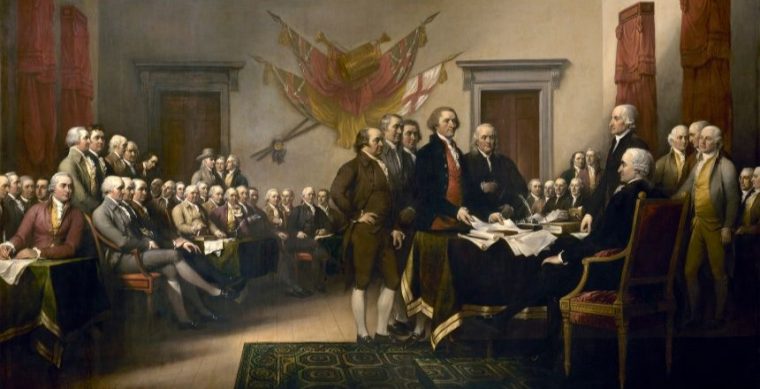
This week, Americans are celebrating the 250th anniversary of that fateful day when the text of the Declaration of Independence was formally approved and adopted.
It took more than an inspiring declaration to unite the thirteen colonies. It also took more than the governing documents later adopted in the form of the Articles of Confederation and later the Constitution. The challenge facing the nation’s founders is captured in the motto they adopted for the new nation’s seal: E Pluribus Unum, a Latin phrase that translates into English as “out of many, one.”
What did it take then, and what does it take today, to be “one” while still being “many”?
History shows that what transformed the union into something more durable was the work of subsequent American leaders who cultivated a culture of human connection — articulating a shared national vision, demonstrating over time that all humans are of inherent value, and creating space for diverse voices to be heard within a common story. It was this deepening connective tissue, as much as any constitutional mechanism, that gradually drew distinct and often rivalrous peoples into a productive and increasingly unified nation.
In a new article published on the Connection Culture website, I take a closer look at how the principles of Connection Culture contributed to the rise of the United States from colonial outpost to modern empire, and encourage each of us to engage in ways that cultivate this culture for many years to come.
Photo: John Trumbull’s painting Declaration of Independence. Public domain. Image has been cropped.


