Treat your employees like family and customers like friends

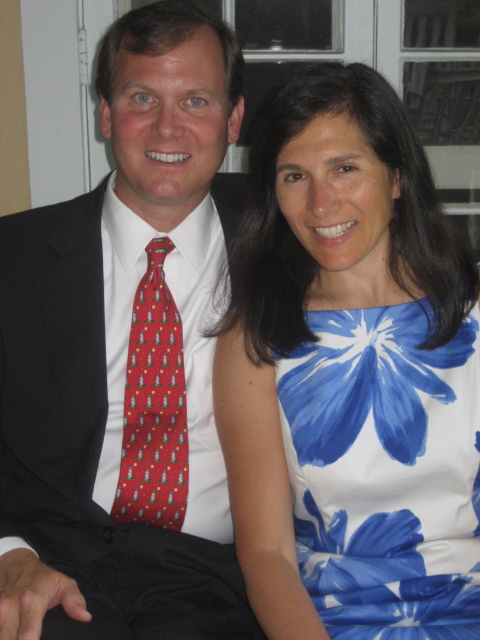
2005_0306italy20060019.JPG

As my wife and I set off for an anniversary trip to Italy, Jack Mitchell, author of Hug Your Customers, sent us a list of restaurant recommendations in Florence. L’osteria di Giovanni was one of the restaurants on Jack’s list. In addition to being an author, Jack is Chairman of Mitchells/Richards/Marshes, a very successful, upscale clothing store with locations in Connecticut and Long Island. Jack’s family’s philosophy is to “treat employees like family and customers like friends.” I knew Jack judged other businesses by that standard and his recommendations would reflect it.

Giovanni’s is just a few blocks from the Arno River and a short walk from the Ponte Vecchio. Dinner at Giovanni’s was an extraordinary experience. After we ordered appetizers, Giovanni stopped by to greet us, ask us where we were from and if we were enjoying our stay in town. He brought us more appetizers to try (on the house), including a new olive oil. In addition to the wine we ordered, Giovanni brought out another wine for us to try because “if you have new olive oil you must have new wine to go with it…it’s a tradition.”

Throughout the evening Giovanni circled back to talk with us. He told us about the Great Flood in Florence in 1966 and how Americans and other individuals from around the world came to help the local people save the town’s artistic treasures. Later he came back with a book about the flood and showed us some of its pictures. When I asked if I could make copies of a few of its pages, he offered to lend me the book. After we finished dessert, paid our bill and began preparing to return to our hotel, Giovanni introduced us to one of his daughters and another American couple seated near us. Before we knew it, we were engaged in conversation. Out came Giovanni with yet another wine to try and freshly prepared chestnuts. Perhaps a half hour later, we bid everyone farewell.
2005_0306italy200600231.JPG

To call that evening at Giovanni’s merely a dinner would seriously miss the mark. It was among the most memorable experiences during our stay in Italy.

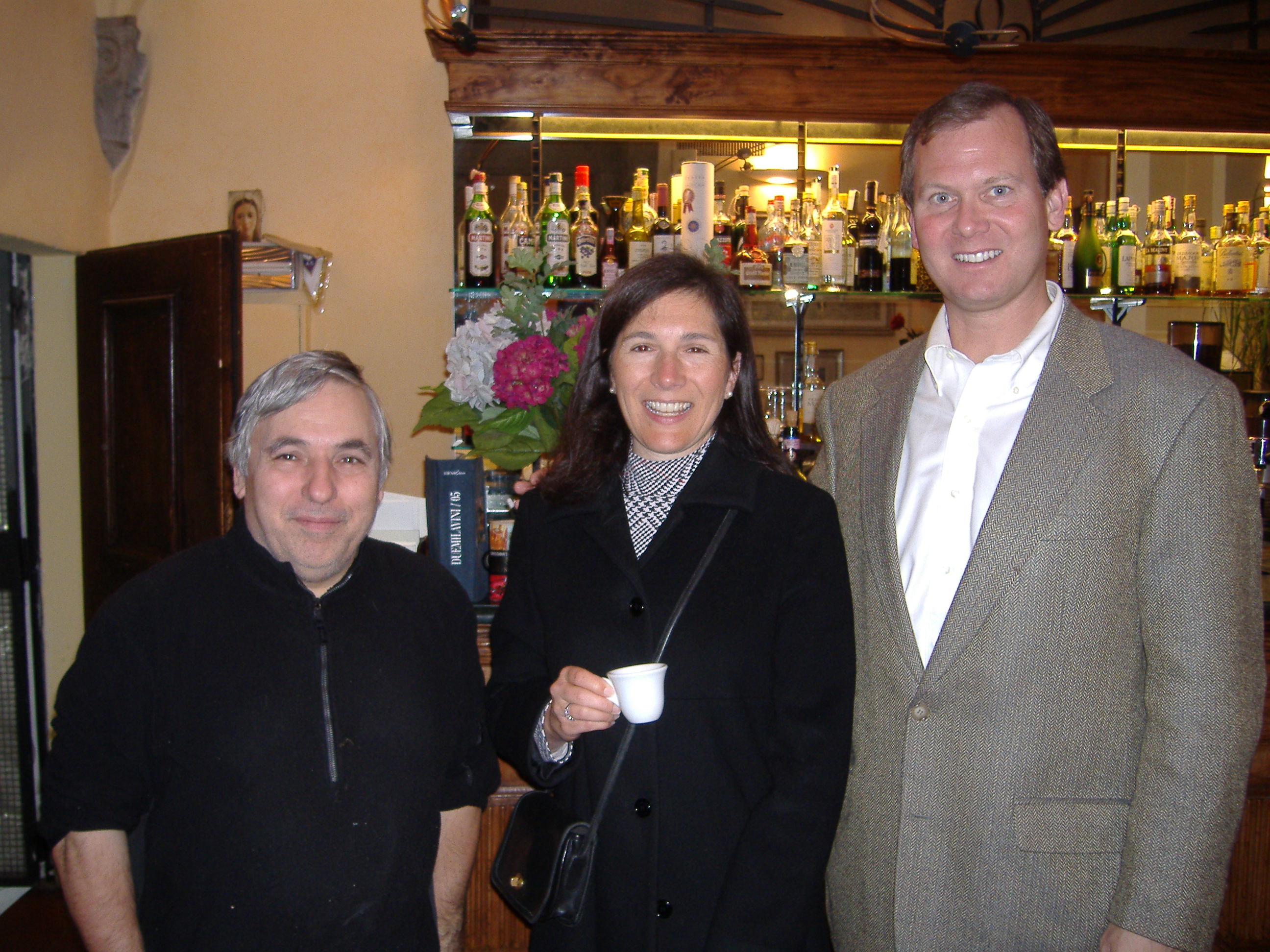
The next morning, we stopped by to return Giovanni’s book. Although the restaurant was not open for breakfast, he invited us in for espresso. We talked more and took a few pictures to remember our new friend and his gift of hospitality.

Six things you don’t know about me

About as close as I’ll get to surfing!

I just got tagged by Phil Gerbyshak, from Slacker Manager . It’s part of a game going around the blogging community where you are asked to share six things that people don’t know about you.

So, here you go:

1) My wife and kids call me “Mr. coffee hour” because I’m nearly always the last person to leave social gatherings.

2) I like any movie with helicopters in it.

3) My worst job was being a security guard at a grocery store on the South side of Rockford, Illinois on one Christmas break from college.

4) I was president of the largest party group on campus and loved it. The group was the American Marketing Association chapter at Illinois State University (we had six hundred members and were nationally recognized as one of the best college chapters in America).

5) I love to read and write even though I’m dyslexic (decoding skills)

6) Most of the time, I’m the only male in our home…my wife Katie and I have two teenage daughters and our family dog is a female (that’s beginning to change as teenage boys stop by more often these days : ).

Here’s another: the picture above with my daughters is about as close as I’ll get to surfing. Our camera wasn’t fast enough to capture my nanosecond of verticality on the waves!

Now, as to the rules of this game: You must:

1. Link to the person who tagged you.
2. Post the rules on your blog.
3. Share six non-important things/habits/quirks about yourself.
4. Tag at least three people at the end of your post and link to their blogs.
5. Let each person know they have been tagged by leaving a comment on their blog.

So my next three are:

1. Seth Godin

2. Robbie de Villiers

3. Wes Roberts

Why “inclusiveness” is in at GE

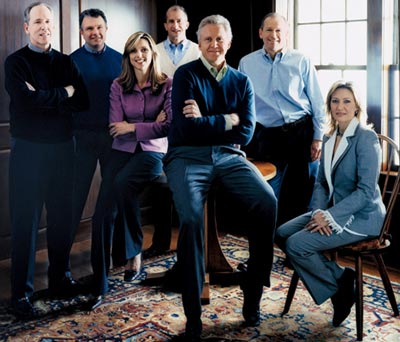
jeffrey_immelt1.jpgAs word has spread that General Electric is trying to increase “inclusiveness,” cynics might snicker and comment that Jack Welch was mistaken to hand over the CEO reigns to a teddy bear like Jeff Immelt. They would be wrong.

Implicit in any criticism is that GE is getting soft. That’s highly unlikely. A core value of GE’s culture is a passion for excellence..that’s not going away. The problem at GE, and in many other organizations, is that under employee performance ranking systems, employees who are not rated in very highest category can begin to feel like second class citizens, especially if the top ranked employees treat them as such. It may be that they’re not kept in the loop or given an opportunity to share their ideas and opinions anywhere near as much as the stars, so they may not feel like they are valued or have a voice.

To Immelt’s credit he knows that these are the core employees of GE. If GE thrives, it will be in part because the core employees are playing at the top of their game which means they need to know and feel like valued members of the team.

There’s no management problem that I can’t find a sports analogy for, including GE’s current situation. Consider Michael Jordon and the Chicago Bulls predicament before the Bulls dynasty run of six NBA Championships. When Phil Jackson became the Bulls’ coach, he helped Michael Jordan see that the Bulls would never be champions if the rest of the Bulls’ players didn’t feel like they were Michael’s teammates, which they didn’t because Michael hung around with his entourage all the time and hogged the ball, especially at critical moments. When Jordan became inclusive by hanging out with the other Bulls, coaching some of them, and trusting them enough at critical moments to pass the ball to them, well, that’s when the Bull’s dynasty was born.

At GE, the stars need to learn to be inclusive in dealing with core employees. They need to be inclusive socially (by getting to know them), economically (by paying them fairly), and politically (by keeping them informed and considering their opinions and ideas). Doing so will meet their human needs for respect, recognition and belonging. Failing to be inclusive will result in low employee engagement and potentially sabotage behavior.

Leading GE is one of the most challenging leadership assignments in the world today. GE’s “inclusiveness” agenda is yet another reason to believe Jack Welch knew what he was doing when he handed the baton to Jeff Immelt.

Weathering the downsizing storm

2005_0311cruise050023.JPGDownsizing, whether it’s from a business slow down, efficiency improvements or merger, is stressful on employees. Encouraging open conversation and human connection is critical to maintaining employee engagement and organizational health during such periods. Click here to read an article I wrote about it for Customerservicecrossing.com.

Alone No Longer

Michael and Katie StallardFour years ago this month, I learned that Katie my wife had advanced ovarian cancer. I set my work aside to focus on helping Katie and our daughters through a difficult season in life. During that period, I spent a lot of time with people. As a result, I learned that I am an “achievaholic” and because of it I had been missing the joy of developing relationships in life beyond my family and close circle of friends. Amazon.com recently published my essay entitled “Alone No Longer” about what I learned during the years Katie battled cancer. For a free download, click here.

Should we separate our personal and work lives?

More people today want to be genuine at work. They feel it is unhealthy to “put on an act” at work in order to fit in and be more promotable. Instead, they want to work at companies that celebrate individuality rather than at companies that force individuals to conform to a corporate stereotype. I once thought that I needed to maintain a certain distance from co-workers in order to be promoted. Experience has taught me otherwise. To read an article on this topic that I wrote for CustomerServiceCrossing.com, click here.

Why the Patriots thrive

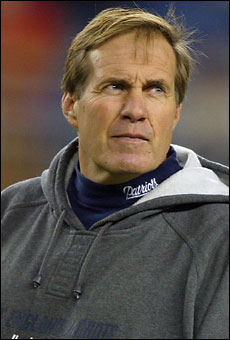
100belichick.jpg Tom Brady

The New England Patriots are poised to win their fourth Super Bowl in seven years. Although it may be early to describe the team as a dynasty, they are clearly doing something right. Those of you who have read Fired Up or Burned Out or attended our E Pluribus Partners presentations or workshops know that great teams create Connection Cultures. The Patriots are no exception.

Our model for sustainable superior performance holds that it requires Task Excellence + Relationship Excellence that comes from a Connection Culture. Bill Belichick is a task excellence master through and through. He has probably devised more metrics dashboards than a hard core General Electric Six Sigma Black Belt. The guy’s passion for excellence is off the charts. When it comes to Relationship Excellence, however, I’m not so sure. He seems a bit curmudgeonish.

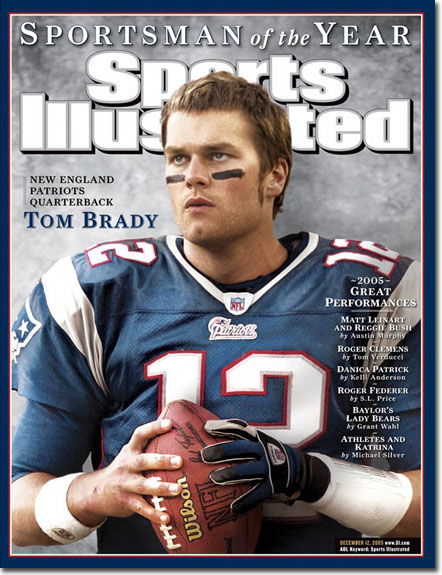
And that’s where Tom Brady comes in, he’s the Relationship Excellence guy and Task Excellence guy to boot. When Sports Illustrated named Brady “Sportsman of the Year” in 2005, it commented that “his greatest achievement grows out of a “generosity of spirit.” He’s always pumping his teammates up with encouragement, giving knuckle fives and head butts. Brady stunned the sports world in 2005 when he accepted a contract that was nearly $40 million below market so that his teammates could stay together. Who wouldn’t love a teammate like that? Peter King, the Sports Illustrated writer, wrote he had never seen anything like it in his 16 year career, and “if you think that plays well in the locker room, you’re right.” When Visa wanted Brady to do a television advertisement, he said he would pass unless it included his offensive line. You get the idea.

In summary, Task Excellence + Relationship Excellence = Sustainable Superior Performance or, if you’re a Patriots fan, you might say Belichick + Brady = Trouble for the Giants. (In the spirit of transparency, you should know that I’m a born and bred Chicago Bears fan.)

Post Note: As you know by now, the Giants defeated the Patriots in a nail biter Super Bowl. Post game analysis clearly shows that creating a more connected culture among the Giants helped. Take a look at this article entitled, “Tom Coughlin: Management style analysis,” and see if you can identify the Vision, Value and Voice elements of a Connection Culture.

“Intentional Connectors” boost employee engagment

Years ago when I was chief marketing officer for a business unit at Charles Schwab, I met David Bradley for lunch in New York City. David is an extremely successful entrepreneur. He founded the Corporate Executive Board and is the owner of The Atlantic magazine. David wanted to pick my brain about how to make his magazine more attractive to advertisers. To my surprise, early in our conversation David asked me to tell him about my personal story…where I was born and grew up, what events influenced my beliefs, who were the individuals I most admired, etc. As I began to recount my journey in life, David asked question after question and was genuinely interested in me.

After a long lunch conversation, I felt like David cared about me as a person and not just as a potential source of revenue. His example taught me a powerful lesson: intentionally connecting with people is wise. I believe being what we refer to as an “Intentional Connector” is one of the factors that has contributed to David’s success.

Many of our clients at E Pluribus Partners have committed to become Intentional Connectors in 2008. As our work shows, great leaders are Intentional Connectors. By their words and deeds, they create Connection Cultures that improve employee engagement, productivity and innovation. Why don’t you commit to becoming an Intentional Connector too? The personal benefits include improved physical and mental health and superior productivity and creativity.

Empathy and understanding provide the foundation to establish human connections. Would the people who work alongside you say that you think of them as human doings or human beings? Do you know their stories? We encourage you to devote some time early this year to getting to know the people around you. When you do you’ll find that, in addition to enriching your life at work, your colleagues will become more trusting and cooperative. One-on-one time during an occasional coffee break or lunch together is a great opportunity to get to know your colleagues. This simple step is common sense… yet in our day and age it is surprisingly uncommon in practice. Task excellence is a must to thrive in business but it is unsustainable if not accompanied by the relationship excellence that comes from a Connection Culture.