Why the Patriots thrive

100belichick.jpg Tom Brady

The New England Patriots are poised to win their fourth Super Bowl in seven years. Although it may be early to describe the team as a dynasty, they are clearly doing something right. Those of you who have read Fired Up or Burned Out or attended our E Pluribus Partners presentations or workshops know that great teams create Connection Cultures. The Patriots are no exception.

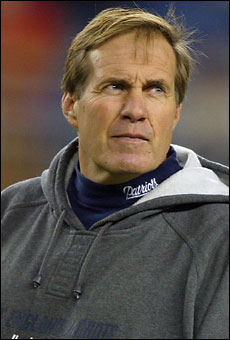
Our model for sustainable superior performance holds that it requires Task Excellence + Relationship Excellence that comes from a Connection Culture. Bill Belichick is a task excellence master through and through. He has probably devised more metrics dashboards than a hard core General Electric Six Sigma Black Belt. The guy’s passion for excellence is off the charts. When it comes to Relationship Excellence, however, I’m not so sure. He seems a bit curmudgeonish.

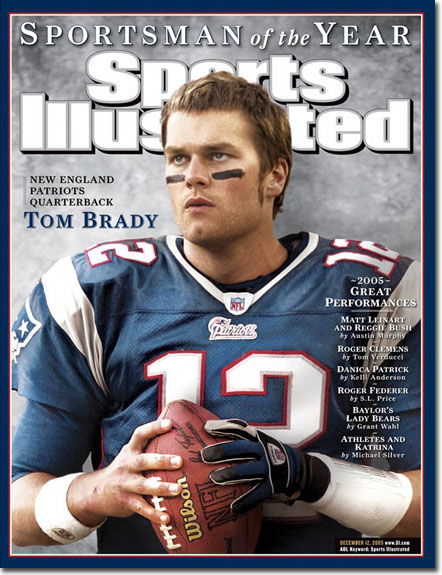
And that’s where Tom Brady comes in, he’s the Relationship Excellence guy and Task Excellence guy to boot. When Sports Illustrated named Brady “Sportsman of the Year” in 2005, it commented that “his greatest achievement grows out of a “generosity of spirit.” He’s always pumping his teammates up with encouragement, giving knuckle fives and head butts. Brady stunned the sports world in 2005 when he accepted a contract that was nearly $40 million below market so that his teammates could stay together. Who wouldn’t love a teammate like that? Peter King, the Sports Illustrated writer, wrote he had never seen anything like it in his 16 year career, and “if you think that plays well in the locker room, you’re right.” When Visa wanted Brady to do a television advertisement, he said he would pass unless it included his offensive line. You get the idea.

In summary, Task Excellence + Relationship Excellence = Sustainable Superior Performance or, if you’re a Patriots fan, you might say Belichick + Brady = Trouble for the Giants. (In the spirit of transparency, you should know that I’m a born and bred Chicago Bears fan.)

Post Note: As you know by now, the Giants defeated the Patriots in a nail biter Super Bowl. Post game analysis clearly shows that creating a more connected culture among the Giants helped. Take a look at this article entitled, “Tom Coughlin: Management style analysis,” and see if you can identify the Vision, Value and Voice elements of a Connection Culture.
Strengthening Human Value in the Workplace

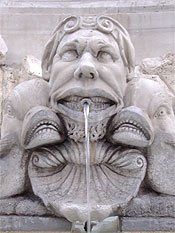
Pantheon GargoyleI discovered this face on the Pantheon Fountain in Rome. Look into its eyes. What emotion do you see? Fear? For much of history, the average man lived in fear. During Ancient Times, empires killed or enslaved humans. During the Middle Ages when feudalism prevailed most people were considered to be property and lived in fear of their owners. The Modern Age began around the time the Pantheon Fountain was designed by Jacopo della Porta in 1570. During the Modern Age, human rights expanded dramatically. Today, it’s unfathomable that four decades ago, African-Americans had to attend separate schools, sit in the back of public buses, drink from separate water fountains and were not allowed to dine at many restaurants.

As human value has increased, so too has economic prosperity. When people are treated with respect, have a sense of belonging to the society they live in, and have access to educational and occupational opportunities, they feel valued and are more likely to thrive.

What might tomorrow bring when it comes to human value?

There is reason to believe human value will increase in the workplace given the coming labor shortage and competitive pressures of globalization. Employers will need to increase human value to attract and retain the people they need to meet market opportunities. And what might the workplace look like if human value increases in the years and decades ahead? Perhaps more people will feel informed and that their ideas and opinions will be considered by decision-makers. Perhaps everyone will have a mentor to help them grow. As human value increases in the workplace, so too will employee engagement, productivity and innovation. Why not increase human value in your workplace today? If you’re a leader, how might you make the people you are responsible for leading feel valued? If you’re not in a leadership position, how might you help your colleagues feel valued?

Note: Leader to Leader published an article in its current edition that Jason Pankau and I wrote. The article is entitled, “Strengthening Human Value in Organizational Cultures.” This is an especially meaningful event for me because it is the first time my work has appeared in Leader to Leader, an award-winning leadership journal that has a connection to two of my heroes: Frances Hesselbein and the late Peter Drucker. Peter Drucker was the founder of Leader to Leader and Frances Hesselbein was a co-founder and has been its editor-in-chief. To find out more about Frances, pick of a copy of Fired Up or Burned Out where you will find a chapter on her miraculous turnaround of the Girl Scouts of the USA. To read the essay, “How Peter Drucker Changed My Life,” click on employee engagement.

“Intentional Connectors” boost employee engagment

Years ago when I was chief marketing officer for a business unit at Charles Schwab, I met David Bradley for lunch in New York City. David is an extremely successful entrepreneur. He founded the Corporate Executive Board and is the owner of The Atlantic magazine. David wanted to pick my brain about how to make his magazine more attractive to advertisers. To my surprise, early in our conversation David asked me to tell him about my personal story…where I was born and grew up, what events influenced my beliefs, who were the individuals I most admired, etc. As I began to recount my journey in life, David asked question after question and was genuinely interested in me.

After a long lunch conversation, I felt like David cared about me as a person and not just as a potential source of revenue. His example taught me a powerful lesson: intentionally connecting with people is wise. I believe being what we refer to as an “Intentional Connector” is one of the factors that has contributed to David’s success.

Many of our clients at E Pluribus Partners have committed to become Intentional Connectors in 2008. As our work shows, great leaders are Intentional Connectors. By their words and deeds, they create Connection Cultures that improve employee engagement, productivity and innovation. Why don’t you commit to becoming an Intentional Connector too? The personal benefits include improved physical and mental health and superior productivity and creativity.

Empathy and understanding provide the foundation to establish human connections. Would the people who work alongside you say that you think of them as human doings or human beings? Do you know their stories? We encourage you to devote some time early this year to getting to know the people around you. When you do you’ll find that, in addition to enriching your life at work, your colleagues will become more trusting and cooperative. One-on-one time during an occasional coffee break or lunch together is a great opportunity to get to know your colleagues. This simple step is common sense… yet in our day and age it is surprisingly uncommon in practice. Task excellence is a must to thrive in business but it is unsustainable if not accompanied by the relationship excellence that comes from a Connection Culture.